07 September 2026

Propaganda is Not Truth

I have spent the past three-or-so years seeing how sad it is that so many people are only listening to and watching the leftist propaganda that is initiated and promoted by the aggressors of the war in Gaza - HAMAS. It's even more sad that the media and allegedly legitimate nations are repeating this in forums worldwide. Since the massacre and attempted genocide of Israeli citizens and Jews, beginning at a Peace Festival, of all things, and continuing in towns chock full of Israelis who supported peace with Palestine, Israel has become the aggressor and the evil one at that. 

Israel has made huge efforts to avoid civilian casualties in their counterattack of Gaza. They have successfully built a record low count of military-to-civilian casualties that is unmatched in history. Yet, that info has been almost universally ignored by Western media and governments. It is estimated by many experts that this effort has doubled Israeli military casualties. HAMAS raped women and children for a week beginning October 7, 2024. They put live babies into ovens and cooked them to death. While they were killing innocent people, they were recording it it broadcasting it on social media. They were calling on cellphones their parents and family gleefully reporting on how many Jews they had murdered. Ignoring such truths is sinful and wrong by any measure of civilized humanity.

I am to the point that I am now of the belief that Israel SHOULD have launched a genocide just to demonstrate what one actually looks like. A true genocide would have started by an obvious, clear, and bold government and military plan to cut off ALL food, water, and medicine to Gaza. Next, an order would have been sent to kill ALL men, women, and children, donkeys, dogs, cats, goats, sheep, cattle, oxen, and any other living thing inside Gaza. Start with a carpet bombing using napalm. Then blow up or bulldoze every building inside the enclave. Seal the cave and tunnel entrances and pump Zyklon-B poisonous gas – the same used by Nazi Germany - into them, then pour in fuel and light it off. THAT is what a genocide looks like.

Genocide doesn’t see the use of phones calls to warn people of coming air and artillery strikes so that the people can evacuate buildings. It doesn’t include opening humanitarian corridors for people to use to evacuate attack zones. It doesn’t include trucking in more food on a daily basis to the victims than was imported PRIOR to the attack. It doesn’t include evacuating severely wounded people to hospitals outside the war zone to heal them. It doesn’t include placing your troops in additional danger to ensure the minimum amount of civilian casualties. It doesn’t include establishing the lowest soldier-to-civilian casualty ratio in recorded history.

THAT is what Israel did and is doing. THAT is why informed people deny the genocide of Palestinians in Gaza. Because it is the TRUTH!

Israel makes up 4/10 of one percent (0.4%) of the Middle East. This small nation has sustained more sustained violence and attacks than any nation on Earth since 1948. In 78 years of independence, there have been only nine years that the nation has NOT suffered an attack. In that time, there have been 1,855 confirmed attacks on the State of Israel. Imagine two military or terrorist attacks on your country every three-and-a-half days. That is life in Israel. Israel has a right to not only their own nation and to protect themselves, but to eliminate the military issues causing these attacks. HAMAS is evil. HAMAS is criminal. HAMAS is cruel. HAMAS is immoral. HAMAS placed their military facilities in schools and hospitals and public parks, totally against internationally recognized Laws of War.

Then their is the idea of the "Two-State Solution." It is ridiculous. Their is currently a 24-state solution: One Jewish state and 23 officially Muslim states, four of which surround Israel. Or a 20-state solution: One Jewish state and 19 Arab states. And the officially Muslim Arab nations of Egypt, Jordan, Sudan, Syria, the UAE, Oman, and Bahrain, as well as Somaliland, agree that the problem is NOT Israel. It is why no other Arab or Muslim nation wants ANYTHING to do with Palestinians. They refuse to allow any Palestinian to permanently emigrate to their nations. They KNOW where the problem lies. 

The ONLY country ever to grant Palestine a homeland is Israel. Not Egypt. Not Jordan. Not Lebanon. Not Syria. Not Saudi Arabia. Israel. Then, Israel forced, in some cases violently, EVERY Jew and Israeli citizen out of Gaza.

Israel was reinstated just as the Holy Bible prophesied. It happened in 1948. Biblical and/or Torah passages say so in Ezekiel, Obadiah, Matthew, and Romans, just to name four. In Israel there live peacefully Arabs, Jews, Muslims, Christians, atheists, Druze, and Hindus, as well as homosexuals, communists, and others, all with equal rights and freedom of speech and of religion. There is no logical, intelligent, cognitive reason not to back Israel, or to back the enemies of Israel.

To oppose Israel is anti-Christian, anti-humanitarian, and anti-moral. How can can anyone claim otherwise with all of the evidence present?

20 July 2026

Wicked, or Not...

Tony was my last First Sergeant for a period when I served in the South Carolina Army National Guard. Tony was a good enlisted leader who would occasionally tell a story-or-two. One of those stories has stuck with me for years.

Tony was an EMT for a few years in his civilian life. He saw a lot that was horrifying, but there was the occasional odd event that would make a good drinking story at the bar. Or in the field.If I recall correctly, he this on a slow day at drill.

So it was that on a particular day Tony's emergency crew got a call to an accident. Upon arrival they came upon what looked to be an awful wreck where a car hit the back of a semi-tractor-trailer. This was before the requirement to have the standard, heavy-duty rear bumper assembly that is seen on all semi-trailers today. It likely would have ensured this scene wouldn't have occurred. But that was still a few years in the future, so what they came upon was a car that had hit the back of the trailer, apparently at the speed limit or more. The trailer's frame was at the same height as the top of the auto's hood and passenger door. The car's roof was completely flattened under the trailer as though the car was a convertible of some sort. Typically, this sort of accident was accompanied by a decapitation.

Tony's rescue crew quickly realized that they would need heavier equipment to pull the car out from under the trailer, and then to peel back the roof in order to access the victim and remove what was probably one fatality, and possibly multiple fatalities, from the car. This was no quick job. They inspected the car for signs of life, bodily fluids, and any other evidence that would give them an idea of just what they would find once they peeled away this super-large, pseudo-sardine can lid. The crew called for a wrecker and prepared the cutting equipment and jaws of life. They also prepped the gurney, body bags, and other items that were quite typical for the recovery of an accident such as this.

Finally, the wrecker arrived. The wrecker latched to the car and the tractor-trailer was prepped to ensure it didn't move. Then slowly, and surely, the car was pulled from under the trailer. Incredibly, the roof was fully in place over what had been a passenger compartment and was firmly set into the car body. The power tools were cranked up to cut the roof supports and then the crews readied themselves to remove the roof.

“One! Two! Three!” and the crew peeled back the roof. Suddenly, a man sat straight up in the driver's seat, and yelled, “THAT WAS WICKED!” Everyone at the wreck site jumped back at least three feet, according to Tony!

Incredibly, the only passenger – the driver – was totally unscathed in the wreck. He didn't even have a scratch or bruise. And he was sober.

And he apparently lay in the car for over an hour, awaiting rescue, staying completely quiet, and subliminally deciding what his first words would be after his near-death experience! According to Tony, it was quite the announcement.

16 July 2026

Two Years and Universal Truths in Railroading

In 1983 WATCO was established Charles R. "Dick" Webb. Born in Independence, Kansas in 1938, Webb died in 2009. A college graduate with a BS in Business Administration, he served in the Kansas Army National Guard nine years while working for the Atchison, Topeka & Santa Fe Railway. Starting at his kitchen table with only eight employees, Dick founded and chaired what would become the Watco Companies, Incorporated. The first operation was an industrial switching operation at a paper mill in DeRidder, Louisiana that is still in operation. Webb then started his first mechanical operation, a rail car repair shop in Coffeyville, Kansas in 1985.

On his passing, Watco employed over 2,000 people in 26 states and operated 3,900 miles of track, 20 short line railroads, 22 industrial switching operations, 14 mechanical shops, 18 mobile mechanical repair locations, and 11 trans-load and intermodal locations. Today, the company is even larger.

In the beginning, the Coffeyville mechanical shop had been held captive to the major rail lines. During discussions with the Union Pacific Railroad the opportunity arose to purchase the moribund line running from Nevada, Missouri, to Coffeyville. This 1987 sale was the mighty Union Pacific Railroad's first short-line sale and WATCO's first common carrier railroad, which was named the Southeast Kansas Railroad. This railroad ran on a shoestring and was eventually folded into the larger WATCO-owned South Kansas & Oklahoma Railroad. Much of the original Southeast Kansas has been abandoned.

But, for the early years, WATCO's forte' was industrial switching. It was an innovation in the mid-1980s. The Regional Rail Reorganization Act of 1973 (the "3R Act") led to the Consolidated Rail Corporation, or Conrail being formed by the US government in 1976 from seven major, Class I railroads and a number of smaller short lines and terminal railraods owned by the seven bankrupt Class I's. That law was followed quickly by the Railroad Revitalization and Regulatory Reform Act of 1976, known as the "4R Act.” These two acts deregulated a US rail industry that had been in financial straights for around 45 years. These laws caused US railroads to finally find almost universal financial stability and success. And it also led to something called industrial switching companies.

Before 1983, industries requiring direct rail service either performed the work in-house, owning their own locomotives and crews, or owned their own common-carrier, shortline railroads, or they were served directly by other common carrier railroads. Seeing the potential in contracting this work as a private venture, and realizing the 3-R and 4-R Acts had failed to address this niche business, Webb became an inventor of contract industrial switching. This allowed smaller operations to get rid of their expensive rail equipment. WATCO would do the work under contract, and later numerous other contract switchers did all the work for the particular industry or plant.

I went to work from 1992-1994, for WATCO in their industrial switching operations. That is what is now fancifully called "first-mile-last-mile" operations. At the time of my employment WATCO was operating industrial switching in chemical plants, paper mills, ports, and warehouses in Alabama, Georgia, Kansas, Louisiana, Oklahoma, South Carolina, Texas, and Virginia, at least. They had also formed and were operating new shortline railroad companies across the Midwest and West.

What I witnessed with WATCO was Class I and union intransigence, and short-line, customer-focused excellence. The first operation that I worked was a Union Camp paper mill in Eastover, South Carolina that had initially hired WATCO during a project doubling the size of the plant. Within months of the plant's expansion, production more than tripled. This was in spite of the two Class I’s and their unionized train crews doing all they could to sabotage WATCO’s efforts. Feeling that WATCO was stealing union jobs (WATCO was not a union shop), they stuffed the plant’s receiving yard with every incoming car, and empty cars enroute to other industries in the area. CSX's Cayce Yard and Norfolk Southern's Andrews Yard in the Columbia area were surely emptier at that time.

This was a concerted effort by the unions to make it impossible for WATCO to get the oldest products into the plant for processing. This affected the final product and also interfered with the paper company’s management of its car fleet. Nevertheless, WATCO succeeded in coming up with a plan to straighten things out and soon had to hire more railroaders to handle the additional traffic from the plant. It also caused the Class I’s to run longer trains from the facility producing more income for the big railroads. Eventually, the unions backed off and accepted that they would no longer work the mill, and that they would just haul cars into and out of the mill's yard. WATCO would do the hard work.

Prattville, Alabama boasted another Union Camp paper plant that was far older and less efficient. WATCO took over from Class I railroad Illinois Central (now part of Canadian National) and within a year the plant received an award for DOUBLING production.

At both plants, the Class I’s charged per car movement. WATCO charged a flat rate per day; car movements were not an issue. This ensured that cars were moved when the customer wanted and needed them to be moved, and the customer didn’t have to worry about possible wrong car moves, or additional switches due to heightened production or an employee error. The industries won with increased production that lowered prices, the Class I's won with increased traffic, and they all won with increased profits.

This sort of success has been born out in hundreds of examples. But, it has also been born out that the Class I’s are less concerned with increased traffic, but are rather more concerned with short-term profits. They are now victims of their overwhelming success since 1976.

Before deregulation railroads were extremely lucky and were considered successful if the were able to produce operating ratios (most simply, the ratio of dollars earned to a dollar spent) in the low-to-mid nineties, signified by a percentage. As an example, if the XYZ Railroad spent 95 cents to earn a dollar (95%), they were considered successful. Many railroads in that day saw ratios in the 100+% range, meaning they spent more than a dollar to make a dollar. Today, the major Class I railroads are considered poorly managed if the operating ratio is in the mid-sixties range! Many of the lines that had 100+% ratios have been sold off to shortlines and regionals and are today quite profitable!

Shortlines and regional railroads, understanding the value of true customer service, are willing to work hard to cultivate customers. Making two or four or 14 cents on the dollar will keep them in business, AND will bring more business to the railroad. Companies like Watco (the current iteration – less caps), Genessee & Wyoming, Gulf & Ohio, Jaguar Transport, and independent lines understand this implicitly. Class I's want large customers who can provide easy-to-move, large-scale traffic with a minimum of labor and employees. They embrace J.B. Hunt, Amazon, Maersk, and coal shippers. And it is why the Class I's have watched their share of freight tonnage fall as a percentage of overall freight haulage in the U.S.

Class I railroads MUST realize that increased productivity, profits, and traffic can only be gotten by enlisting shortlines and regionals to do the grunt work. These smaller companies, far less entrenched and able to adjust more quickly to customer needs, are seeing their tonnage and profits increase. The industry needs to leave the Class I’s to move the trains from Yard A to Yard B, while shortlines take care of the work the big boys don't want or seemingly are unable to perform. Until then, Class I's will continue to lose traffic and profit, and the unions will continue to lose members.

10 July 2026

Alexis de Tocqueville Updated (via YouTube and TicToc)

In 1835 Alexis de Tocqueville published the first of two volumes of what many consider to be a seminal work of political and sociological analysis, Democracy in America.

Sent by the French government in 1831 to analyze the American prison system, Tocqueville and his colleague Gustave de Beaumont used the mission as a pretext to study America as a whole. Tocqueville described American society with all its warts as well as its entrepreneurial and relatively egalitarian culture. While certainly not a book of high praise, it is undoubtedly a clear look at what America was in the early 19th Century that today is considered a classic.

Fast forward 195 years and it occurs to me that we are seeing a familiar and similar analysis play out on the very modern instruments of YouTube and TicToc. Coming to America to watch their countries' soccer teams play in the World Cup, tourists from 64 nations have invaded America's shores. And they have been stunned by what they have seen and experienced. 

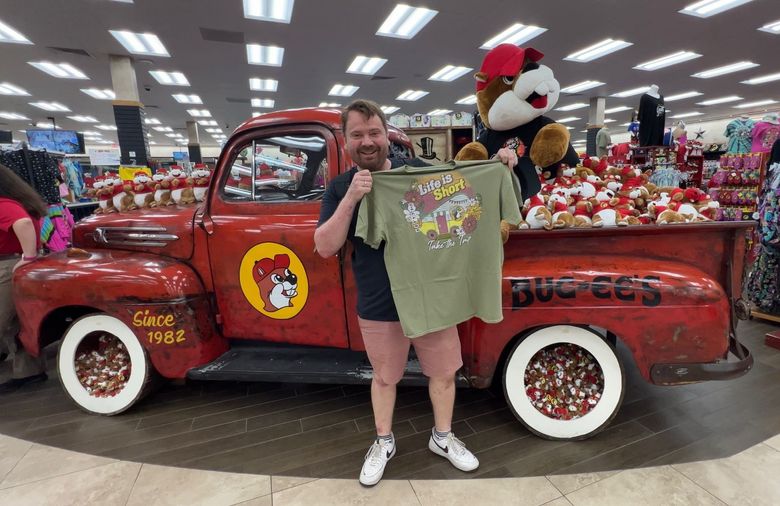
English soccer fans are being amazed by Texas barbecue. Watching them bite into a rib and seeing their eyes expand into saucer shapes and saying words such as “incredible” are fun. Norwegians who have been amazed by Waffle House's service, food, food portions, and reasonable prices. They are amazed that after anticipating needing $100 for the three of them to eat, then receiving more food than they can eat, they walk out with $70 still in there pockets. The Frenchman amazed at free drink refills. Germans amazed at 60 fuel pumps, freshly-cooked brisket, walls of jerky, and souvenirs at Buc-ees. They exclaim that it isn't a gas station, it's a mall. Something many Southerners know and understand completely. 

 World Cup fans in the U.S. are sightseeing at … Buc-ee's and Bass Pro  Shops? | The Seattle Times Seattle Times 

German fans who were amazed by the Americans, who seeing that the Germans were apparently stranded in Boston, offering the foreign strangers a free ride to their hotel. The South African stunned at watching women walk unafraid through a local park, and the total lack of walls, lights, and barbed wire around middle-class homes. The French being stunned by the overt patriotism at a game where the American team wasn't even playing. They watch red, white, blue smoke roll from the stadium roof and US Air Force jets fly overhead. And all their amazement at America's 250th Independence Day celebrations and all the flags hanging from homes everywhere. The amazement in the face of an Australian tasting Chic-fil-A for the first time. It's just fast food, isn't it?

 Women's World Cup: Fans stunned by incredible food at stadiums across  Australia and New Zealand | Daily Mail OnlineDaily Mail

These are things all Americans take for granted.

Certainly, these videos lack the objectivity and underlying criticism of Tocqueville. But, at the same time it has become clear that these foreign soccer fans realize that the picture of America that has been fed to them by mass media has been mostly a lie. Many now understand why so many will risk their lives and their fortunes to come to America. Many have said that they would like to stay, but like honest people are going back home. They love the American heart, the kindness, the can-do attitude, and the freedom.

Certainly, America has its faults. All places and people do. But, the kindness, culture, wealth, and welcoming attitudes of Americans who embrace all that is right are here on full display. It is who the majority of us are.

So, by all accounts, the World Cup will absolutely be a sports success and perhaps even a financial one. But, it is on the way to being, perhaps, a surprising cultural success anticipated by absolutely no one just a couple of months ago. The real success, though, is experiencing America through eyes of foreigners who were skeptical of their safety and the welcome they would receive when they left their homes. It reinforces the America half of its citizens love and believe in. And hopefully, it will help the other half to see what an incredible and amazing nation they actually live in. Especially so when they love to point to the opinions of foreigners toward the US.

08 July 2026

Patriots & Victims

I served in the in the US Army for nearly 29 years. I served as an Active Duty soldier for nine years-and-a-day, and then in the Army Reserves for a bit over two years, before finally ending up with the South Carolina Army National Guard (aka "SCARNG") for over 17 years. 

In those 28-plus years I had some interesting assignments and met some amazing and incredible people. Today, I want to talk about one those amazing people, a man I'll call Abdulla. I do not know of his status today, so I don't want to place him in a position of danger. You'll soon see why.

In 2004 I was sent to a school to train on the AH-64D Apache at Cecil Field, outside Jacksonville, Florida. A former Naval Air Station, the base had been turned over to civilian authority and a contractor had bid on the contract to train National Guard personnel on the "D Model." The 1st Battalion (Attack), 151st Aviation Regiment (aka "1/151 Aviation" or to the personnel of the unit "the battalion") was to be reequipped with the AH-64D and we had a group there to learn the finer points of a far more advanced helicopter. While there a VIP group came through that included the recently retired Army Aviation Branch Sergeant Major Edward P. Iannone, Jr., whom I had met just months before when he was still serving as a soldier. He was then working for the Army Aviation & Missile Command, or "AMCOM." We struck up a conversation and I mentioned why we were at the school. Cryptically, he told me that those new, more advanced aircraft may be delayed.

Right after our group returned from Florida, 1/151 Aviation received warning orders to prepare for deployment to Iraq. Which we did. In Summer 2004, we moved to Ft. Bragg, NC, for training and soon were loading up for deployment to Iraq, in record time we were told. In the meantime our commander had somehow finagled a favor and was able to have 14 of our 16 AH-64A helicopters painted into two-tone gray by the US Marines at Marine Corps Air Station Cherry Point. It was absolutely scandalous in the eyes of the US Army, but the US Army was able to do nothing about it if it wanted the battalion in Iraq! And we deployed with gray aircraft. It was a highly successful experiment, so therefore it was rejected by the US Army and no more US Army helicopters were ever again painted gray.

Interestingly, while we chose the call sign "Ghostrider," the same used by no less than two other units in-theater, the insurgency would call us the Blue Dragons. It referenced the occasional appearance of the gray helicopters that would appear in a bluish tint in the right light. Our commander refused to adopt it as a call sign and we continued to deal with conflicting call signs. 

We arrived in Kuwait where we unloaded the ships that had our equipment aboard and moved to the forward base in the Kuwaiti desert called Camp Buehring. I was assigned to the advance party and in early October we arrived at Qayyarrah West Airbase in northern Iraq to prepare the transition from the 10th Mountain Division's OH-58D Kiowa Warriors. Once the crown jewel of the Iraqi Air Force and called Saddam Air Base, the base had been essentially decimated by coalition forces during Desert Shield and Desert Storm, as well as Operation Iraqi Freedom. American forces had occupied it and termed it "Q-West" which was universally spoken as "Key West."

And it was here that I met Abdulla. 

I was assigned by my battalion commander as the liaison for our local Iraqi workers. They were hired through a local Iraqi contractor who provided the US forces on the base with laborers who would handle minor repairs and maintenance efforts to keep the infrastructure that was slowly being repaired in working order. I would take a HMMWV (High Mobility Multipurpose Wheeled Vehicle which is universally known as the "Humvee") and head to the main gate every morning to pick up "our" workers, who had spent a great deal of time avoiding the gaze of local insurgents on the way to work.

I learned much from them. After signing them in, I would distribute them to the battalion's individual company areas. The D Company contingent, which was my company, had five workers. They had a small building from which to work and I was immediately invited inside where tea was brewed and we discussed the day's tasking and other "important" things. They were able to teach me enough Arabic that I was nearly conversational within five months, surprising myself greatly! And I helped them to improve their English. 

Abdulla was the "straw boss" and clearly the senior member of the five. He and Ali (also not his name) carried themselves in a manner that reminded me of soldiers, which I would soon find our was a correct assumption. Ali had been a sergeant in the Iraqi Army. Abdulla was a retired infantry Sergeant Major, or likely referred to by their Anglophile army as a Warrant Officer 1 in that day. This meant Abdulla was the senior enlisted man in a battalion, with three companies of likely around 150-200 troops each.

During our time in Iraq we were engaged in Operation Iraqi Freedom III (OIFIII). During this time Al Qaeda and other groups had decided to take on the US and the nascent Iraqi National Guard across Iraq. The ING had been reconstituted from the Iraqi Army and was being trained by coalition forces. While it had many good soldiers, their loyalty to the new regime was questionable and their training was not complete. This led the insurgents to attempt the takeover of the northern, non-Kurdish portion of the country. This included Mosul and the smaller town of Tal Afar. The insurgents were rightly afraid of the Kurdish militia known as Peshmerga and stayed away from most of the country east of Mosul. They were, though, killing and intimidating anyone they could reasonably identify as working with, for, or doing business with the coalition. Beheading and public displays were the preferred methods.

I grew to respect Abdulla. He was direct and honest. He was also a patriot. I would later discover that he had a tattoo of the Iraqi Army crest on his inner forearm. There's no doubt he had fought the Iranians during the Iran-Iraq War. I felt real sorrow for him and Iraq. One morning during tea I could see he was agitated. During our conversation between the six of us this one morning, Abdulla looked coldly and determinedly at me and startled me by saying, "You Americans just need to nuke the whole country (of Iraq) and start over."

I replied by saying that it would mean the death of him and his family. He didn't blink. "I know."

It was later that I learned of the tattoo. He always wore long-sleeved shirts. I had assumed that he did it due to the work we had hired him to do. But, the sleeves were there to hide the tattoo that was no longer on his arm. There was still some ink on the edges of a large scar where the tattoo had once been.

Abdulla was in charge of an infantry unit during the invasion of Kuwait by Iraq, and the subsequent defense of Iraq's new 13th province. They were literally on the Kuwait-Saudi border looking at the forces arrayed against them after their conquest and the subsequent build-up of the allies of strange bedfellows who were lining up against Iraq during Operation Desert Shield. Abdulla's soldiers had worked steadily and efficiently to build bunkers and fighting positions that were planned and placed in such a way as to funnel allied armor and troops into kill zones of minefields and intense crossfire. It didn't work. The initial aerial portion of Operation Desert Shield was soon pounding their carefully crafted defenses into dust and splinters. Abdulla did everything in his ability to keep his troops ready for the upcoming battle. But, they mutinied. They seized him and, taking a heated piece of metal, scorched the tattoo off his arm.

I still wonder how Abdulla, Ali, and the other four men I met and shared tea with are doing today. I hope for them a stable and prosperous Iraq devoid of mad strongmen, Islamic terrorist, and the gross corruption it entailed. Maybe someday, we can meet again, and sit for some tea.

02 July 2026

Communists and Nazis - A Witnesses' View

My time in Germany as a contractor was challenging, exhausting, and fun. I worked with a fine group of people, generally, though much of the management and leadership left much to be desired. There WERE some outstanding leaders there, but they could not overcome the many others that should not have been there.

But that's another story, altogether.

While there I met some wonderful people who had so many stories to tell. And many did. One of those was Janine, an wonderful, older woman who worked at the Gasthaus where my wife and I stayed for most of the 22 months we were in Europe. My wife stands in front of the establishment below.


I offended Janine one day. I asked where in Germany she was from.

"Do I look German to you?" she asked aghast. Janine was a flaxen-haired woman with nicotine-stained teeth. She carried the beauty of her youth, though clearly aged, with dignity, style, and determination. My only answer was, "Honestly Janine, everyone looks American to me!" 

America is a nation of immigrants after all.

"I am Polish!" announced Janine as she struck a regal pose. Then she told me her story.

But first, a story of war and invasion. 

Poland was formed from diplomacy and conquest in the aftermath of World War One. It's bulk was carved from the carcass of eastern Prussia, and expanded after wars against Republican Russia, the new nation of Ukraine, and the newly formed Soviet Union. It was a nation widely known for its martial traditions. Poles had fought with and against the Russian Empire, with the Prussians and the Germans (after German unification), and with Napoleon, always with the eye to reestablish the Polish nation.

Janine was born in the portion of Poland that had been Ukraine before the Polish conquest. It was this part of Poland that the USSR was granted in the secret Ribbentrop-Molotov Treaty the week prior to the launch of World War Two. After the Nazi invasion, the USSR invaded eastern Poland two-and-a-half weeks later, retaking the land they believed to be theirs. Janine, a child at the time, and her mother (I assume her father was fighting the Germans or Soviets, or was conscripted into what was essentially slave labor for the conquerors) found themselves under the communist yoke for the next 21 months.

Then, Nazi Germany launched Operation Barbarossa, the invasion of the Soviet Union. Very quickly Janine found herself under the rule of Nazis for nearly two years. 

German fortunes turned catastrophically in February 1943 at Stalingrad (now the city of Volgograd) and saw the steady and inexorable retreat that eventually led to defeat in 1945. Meanwhile, as the Soviets advanced steadily toward their home, Janine's mother had to make the decision to await liberation by the USSR's Red Army, or to run away with the Nazis.

They chose the Nazis.

"Really?" I asked. "Why?"

"The Nazis were much better and kinder than the communists." Apparently, it wasn't a difficult decision. https://upload.wikimedia.org/wikipedia/commons/e/e6/Fotothek_df_pk_0000126_029_Fl%C3%BCchtlinge_mit_Handwagen.jpg

Photo: Deutsche Fotothek of the Saxon State Library / State and University Library Dresden. Original caption: "Mann repariert Fahrradschlauch - Frauen holen Wasser am Brunnen auf der Straße" (This file is licensed under the Creative Commons Attribution-Share Alike 3.0 Germany license.)

Janine's family settled in Bavaria, in then-West Germany. She would go on to work for DeutscheBank in their office in Tripoli, Libya, where she would witness the US airstrikes against Libya's Gaddafi Regime after their attack on US troops at a night club in Germany. 

In some ways, I envied her view of some of the most striking events in history. But, on the other hand...

If anything, her insights into a system that was WORSE than Nazism were a revelation. For that, I am forever grateful.


23 January 2026

The Liars, Cheats, and Thieves the V.A. Believe They Serve

I am a veteran. I spent almost thirty years in service to the United States of America, willing to give my life, my health, and my service to my nation. I retired after having served on active duty, as a reservist, and in the National Guard. And while I was being recruited I was assured that the military takes care of its own. If I were to retire I would never have to worry about health care or destitution. I would be rewarded for my loyal service.

I retired with an honorable discharge, a stack of medals and ribbons, and a series of injuries mostly emanating from that service (from back issues, a torn knee ligament, broken noses, to exposure to burn pits and tuberculosis).

Today, I receive my health care from the Department of Veterans Affairs, or “V.A.”. So did my father. So does my brother. The three of us retired. And now, my mother does, also. She served in the Women's Army Corps, aka “The WACS.”

Now allow me to digress for a moment. What most Americans and many service members don't understand is that the V.A. has two 'divisions.' One is exclusively health care. The other is the bureaucracy that determines service members' disabilities, and their actual eligibility for these earned benefits. The system is archaic and incredibly bureaucratic. It takes many veterans years of applications, examinations, submissions, and appeals just to be recognized as even somewhat disabled. Many veterans could be technically labeled as 200% disabled (the max is 100%). But just getting the minimum for benefits (30%) can be an utter nightmare. I know a man who was severely injured and was medically discharged. He's in a wheelchair, but struggled to get even a 10% disability initially.

The health care side has had its moments of shame, also. We've all heard of secret wait lists where not a few veterans died while waiting for the most basis lifesaving care. It was not pretty. So far, though, they have done a decent job of caring for me. My hip replacement was well done. (I like to joke about being a cyborg now.) And my CPAP machine has helped me (as well as my long-suffering wife who endured years of my loud snoring) to sleep more comfortably and through the night for over five years.

Nevertheless, the greatest and most connective issue with both these sides of the V.A. is the apparent, though vehemently denied by V.A. employees, attitude that all us veterans are grifters, liars, thieves, and scam artists just waiting to con the system to get better disability pay and better benefits. I personally have gotten into heated discussions with V.A. employees who steadfastly claim there is no bias against the very people they are employed to care for.

BUT, if this were the case, why would every major veterans' organization in the nation train, direct, and have on hand thousands of Veterans Service officers whose only duty is to guide veterans through the quagmire and bureaucratic maze of applying for benefits we have all EARNED? This includes the American Legion, Veterans of Foreign Wars, Disabled American Veterans, and many others. Why are there so many lawyers who do the same thing for a fee? Why do many states have their own veterans affairs offices whose mission is to get their citizen veterans the benefits they deserve?

It took me nearly a decade to get a disability rating despite severe and nearly debilitating back pain, and a deviated septum from two broken noses, my knee injury, tinnitus, and exposure to TB. The last two aren't covered despite them being caused by service duty. I went to doctors, clinics, chiropractors, acupuncturists, and therapeutic massage, much of it paid out-of-pocket, to prove the injuries were real.

Then, I was to have an examination at the V.A and was told that I would be required to have a driver to drop me off and pick me after the appointment. So, I arranged to have my son drop me off. He would then pick me up after I called him. I went to check in and was told they would need the signature of the driver. I told them he had left to perform some errands (he had arranged my issues around them), and I would sign.

No, I was told. My son had to sign.

I was stunned. They would take the signature of someone with no military or V.A. ID, but refused to trust the soldier standing before them? I became irate once it dawned on me that they didn't trust one of the veterans they are SUPPOSED to help and support. BUT, they would trust the word of someone off the street they had no record of. I was even escorted to the clinic in the facility by armed security! Unbelievable! That is when it dawned on me that they actually DO believe we're all lying scum who can't be trusted. The very people who have sworn to give their lives for this country!

Now, I have been using my CPAP for five-and-a-half years. I clean and maintain it. And I have even ordered a part three years ago as per the instructions given to me when it was issued. After half-a-decade parts are wearing. I need new ones. So, I contacted the V.A. with a detailed list for replacement. I got a reply to send detailed shipping information. THEN, I got a message that my primary provider had to send the request, despite my having contacted the provider and being told everything was good!

So, again. I run into the clear and obvious belief that somehow, after nearly thirty years of service, an Honorable Discharge, and a record in the V.A. system showing that I have a CPAP provided by them, I'm STILL not trustworthy.

If only getting V.A. benefits and support were as easy as getting funding for welfare or immigrant day cares.

11 September 2025

King and Kirk: America's Next Moment?

On April 4, 1968, Dr. Martin Luther King, Jr. was assassinated at the age of 39. King left behind a wife and three children. He was and still is an American social and political icon of the highest order.


A Baptist minister, for years he led protests for racial equality and civil rights using nonviolent resistance and civil disobedience, led marches for the right for all adult Americans to vote, for desegregation, and equal labor rights. He led marches on Washington, DC, and two of three Selma-to-Montgomery civil rights marches. He was the first president of the Southern Christian Leadership Conference, which became and still is a major civil rights organization. And he was under heavy surveillance by the federal government under Presidents Johnson and Nixon. FBI agents investigated him. King was vilified by the press.


And King was long opposed to American involvement in the Vietnam War.


Then he was removed from the equation when a lone rifleman at the Lorraine Motel in Memphis, Tennessee assassinated him, though there are still questions as to whether that man was James Earl Ray.


In 1977, King was posthumously awarded the Presidential Medal of Freedom.


I will argue that King's death was the single most significant assassination of any American who was not a politician. He had thousands, if not millions, of friends and followers. But, he never ran for political office, though he was a registered Republican. Since his death, his name has been and is invoked by politicians and leaders of every sort for far too many positions, reasons, and movements.


Then, fifty-seven years later on September 10, 2025, Charles James “Charlie” Kirk was assassinated at the age of 31. He left behind a wife and two children. He was an American social and political icon of the highest order.


For years he held events for equal rights that opposed racist DEI policies, as well as other issues. His signature event were open-air lectures and question-and-answer sessions on US college campuses. These open-air events were necessitated by college leaders intentionally placing his events in classrooms and auditoriums that were far too small to hold the crowds who showed up to hear him speak. He founded Turning Point USA at the age of 18, also known as “TPUSA”, a conservative youth and student movement that's mission is to counteract the leftist indoctrination so prevalent in American schools and universities today. TPUSA, as well as hundreds of other conservative organizations, was placed under heavy surveillance by the federal government under Presidents Obama and Biden. Kirk was also vilified by the mainstream media.


Also a staunch Christian, Kirk was long opposed to American involvement in foreign wars, railing against American involvement with Iran, Russia, and others.


Then he was removed from the equation when a lone rifleman at Utah Valley University in Orem, Utah assassinated him. I'm sure there will be questions as to was the actual shooter for decades to come.


Kirk will also be posthumously awarded the Presidential Medal of Freedom.


I will argue that Kirk's assassination is the current generation's Martin Luther King, Jr. moment. And like King, Charlie Kirk was not a politician. He never ran for political office, though like King, he too was a registered Republican. And he has thousands, if not millions, of friends and followers.


The assassination of Charlie Kirk, like that of Martin Luther King, Jr. for the Left, will likely solidify American conservatives and will arguably bring into that fold millions of others who were indifferent or doubtful of the motives and intentions of Kirk and his supporters, and those of his opponents. This could be for America a watershed moment the likes of which hasn't been seen in nearly six decades. The death of this man, who was not a politician, could lead to vast changes in the landscape of American society and politics.


And like the death of King, this is likely not what the assassin intended.

02 June 2025

Adulting 101? Seriously?

So here we are.

No this is not a joke or a story produced by The Onion or The Babylon Bee.

The Greatest Generation have now produced grandchildren so inept that universities are launching “adulting” classes. This is what you get when government attempts to do the right thing. Generations of people who can't read, write intelligent sentences, or think critically.

The Daily Mail reports that Toronto Metropolitan University in Canada has launched 'Adulting 101' for “students who can't perform the most basic life tasks like changing a tire, buying groceries or doing laundry.” (See below)

This news was preceded by a New York Post story that the preeminent university in all the land, Harvard, has launched a new remedial math course. Called Math MA it is one year long, meets five days a week compared with the regular two days, and likely doesn't carry any graduation credits. Remedial math at Harvard.

Is anyone surprised? I'm not the least bit surprised by any of this. Seriously.

Our children, a daughter and a son, are now in their thirties. During their years at home in a traditional, Western, nuclear family, they were taught basic, common sense tasks such as doing laundry, cooking, cleaning, wiping after going to the bathroom, bed-making, basic carpentry and home repairs, and simple automotive repairs and servicing. Both kids rolled their eyes at doing some of these things. My greatest failure in this endeavor was my inability to teach our daughter how to drive a standard transmission car. I had taught my wife, and I taught my son. One failure I have to accept. I'll teach my daughter's daughter!

But, that failure is but a shadow in my wife's and my efforts to give our offspring basic life skills. Overall we succeeded.

And this was no better demonstrated to me, and starkly so the failures of the generation in which they were raised in, than one Autumn 2006 day when we received a phone call from our daughter. She was then in her freshman year at college.

A home football game was played the night before. That meant the vast majority of people on campus were at the stadium which cleared the way for a group of local teenagers to stroll through campus slashing the tires of over three dozen cars. Our daughter's car was one of those cars. She called home to see if I had a lead on an honest tire merchant in the small town where the college is located. I did, and she got a good deal on a new tire.

Happily, though, through my efforts at basic, common sense instruction, she pulled out her car jack and lug wrench and changed the damaged tire on her car with the spare. She then found herself doing the same for three classmate boys who were clueless in changing a tire. THAT was nineteen years ago. And while they may have been eighteen, they were still boys. A man knows how to change a tire.

But, how could I have possibly seen the harbinger of things to come back then. Now these universities and colleges are making money by charging for “adulting” classes. But perhaps I should have. I went back to college during the time my daughter was at hers. I went to Limestone College, a venerable liberal arts school founded in 1848, at a branch campus they had opened near our home. One of the required courses was a one-credit-hour class on – and I kid you not – the course catalog. THE COURSE CATALOG! Limestone was the fourth school of higher learning that I had attended. (Yes, it took me 31 years to get my bachelors degree).

I questioned the requirement and was told that it was now required by the accreditation authorities. I threw up my hands and passed the course with a 4.0. Sadly, Limestone College closed the doors a month ago after 177 years. Maybe the course catalog had a role.

The United States for years had the finest education system in the world. It is now dead last among modern, industrialized nations. It's frightening to believe that it's happening in Canada, too.

The great Thomas Sowell has been speaking and warning of the consequences of the things happening in the education, social, and government systems for the past 40 years. The real question today is how do we fix it? The 'radicalism' of the fix is likely more than the populace believes it can bear. I'm hopeful, but realistic. I'm frightened for the US, the West, and the planet as a whole.

And I can't really come up with a decent ending or summation for this particular blog entry. Make one up of your own.


Additional reading:

https://www.dailymail.co.uk/news/article-14754261/university-launches-adulting-101-course-teach-basic-life-skills-canada.html

https://nypost.com/2025/04/05/opinion/harvard-univ-the-ivy-league-teaching-remedial-math/


09 May 2025

FEMA Requires a Mercy Killing

The Trump Administration has come into its second term with a full and complete understanding of how broken the system is. We have all witnessed the weaponization of the Internal Revenue Service (IRS), the Federal Bureau of Investigation (FBI), the Department of Justice (DOJ), and the gross mismanagement of many other agencies. And this includes what may be considered the poster child of a broken bureaucracy – the Federal Emergency Management Agency (FEMA). Trump's push to dismantle FEMA says perhaps more on the Trump administration's views on the role of the federal government, specifically its role in helping states respond to natural disasters, than any other.


FEMA is an agency within the Department of Homeland Security. President Jimmy Carter created the agency by two Executive Orders on April 1, 1979. The agency's original and primary purpose was to coordinate the response to disasters in the country, specifically those that overwhelmed local and state authorities.


FEMA's unraveling began to show after Hurricane Katrina hit the western Gulf Coast, devastating southern Louisiana and nearly wiping out coastal Mississippi. Over 1300 people died and over 600 remain missing. Biloxi today looks nothing like it did prior to the hurricane. And many of those deaths happened AFTER the arrival of FEMA!


Charities from across the country like the Red Cross, America's Second Harvest, Amateur Radio Emergency Service, the Southern Baptist Convention, the Salvation Army, Oxfam, Common Ground Collective, Burners Without Borders, Emergency Communities, Habitat for Humanity, Catholic Charities, Direct Relief, Service International, A River of Hope, the Mormons, and many others religious and secular provided aid and relief. $4.25 billion in donations was raised from the American public. But, those relief organizations were not allowed into New Orleans proper for several days after the storm because of safety concerns. They were all ready within hours – not days or weeks. Nevertheless, some smaller organizations and individuals ignored the blockade and provided some early and desperately needed relief. Two privately chartered planes from FasterCures evacuated 200 patients from Charity Hospital in New Orleans, which was severely damaged and suffering from power issues.


FEMA was supposed to be coordinating all of it. It's there mandate and their job. And despite pre-positioning of equipment and personnel, they took over a week to begin. Who can't recall the images of thousands of people attempting to survive in the Louisiana Superdome? And don't forget the thousands of unused 'FEMA trailers' sitting in fields post-Katrina. Much of that inventory was eventually sold off unused at government auctions for pennies on the dollar. FEMA's director would resign due to FEMA's corporate incompetence after that fiasco two decades ago. It clearly hasn't gotten any better.


Today, FEMA is a bloated, inefficient, plodding agency whose effectiveness has dropped exponentially as the agency has grown. I was in western North Carolina the week after Hurricane Helene roared through. In that area west of Asheville along the Pigeon River FEMA was nowhere to be seen until the last days of Week 2. And they were clearly NOT managing, but rather controlling things - or attempting to do so.


President Trump realizes that any federal agency will do all it can to expand and increase its mission (i.e. “mission creep”) in order to justify its existence and to build its bureaucratic power. FEMA’s original mission is in its name - Federal Emergency MANAGEMENT Agency. It was supposed to be a management organization whose job it was to coordinate emergency services after major disasters and events. It was to be a clearinghouse to ensure a minimum of overlap and to make sure that resources from local, regional, state, national, and private agencies and groups are used in the most effective manner. Instead, they have become a provider of services. But, they sadly don't do it very well and end up wasting federal tax dollars or worse causing the waste of privately donated funds.


FEMA has outgrown its mandate and its usefulness has atrophied. Whether it is thousands of unused ‘FEMA trailers’ or giant ‘FEMA camps’ for its workforce to live comfortably in North Carolina while local disaster victims struggle to live in flimsy tents with no running water as winter came on, FEMA has become an example of what is worst in the Federal government. And local and state governments have seen the problem. They have set up their own agencies who do things far better. And they do.


Trump understands this. And unlike federal bureaucrats, Washington swamp-rat politicians, and previous presidents, Trump is determined to eliminate the massive waste and inefficiency that is the heart of the US government.


FEMA’s time is over. And it has been for twenty years.

08 April 2025

The Prom and Regret

 I'm getting older.

I went to high school in the 1970s. It was a time and place where we parked our pick-up trucks in the school parking lot with a gun rack in the back window with two long guns cradled in it. We had things like corporal punishment and parents who spanked you even after you got paddled by the teacher at school in the class room in front of all your classmates. The times were clearly different, but even so we still had to deal with mean girls and bullies, ugly pranks and general teenage stupidity. Just like today.

In my high school there was a certain girl who was not all that attractive. She was one of many, but for whatever reason she seemed to get targeted a bit more than most. She was smart and talented, but she did little to improve her standing due to her clear social clumsiness. She had a group of friends, though, and seemed to do well nevertheless.

Then, despite her social flaws and unattractiveness, a classmate invited her to the Junior-Senior Prom. Understandably, she was very excited. This was the school's social event of the year, as it is most everywhere in the US.

Of course, like most every girl, she went out and bought a beautiful dress for the occasion. She got her hair done. She put on her make up very tastefully, and got ready for the big evening.

The day of the prom arrived. The excitement at school was palpable. Then, her date informed her that his car had broken down and he would be unable to pick her up to take her to the prom. He would meet her there, he said. And she was dropped off at the venue by her parents, and she waited. But, her “date” never showed up. She obviously had been pranked. Rather cruelly.

She sat alone at a table in a very dignified fashion, but clearly sad. And she was the subject of many whispers and pitied glances. I was a senior that year. And I had my date. But, despite my status as a football letter man and running on the track team (field events because despite being fit, I was very slow) and being a senior, I was far too concerned with what others thought of me. So I just shook my head and felt sorry for her, joining in the glances and whispers.

Today, over forty years later (although it honestly didn't it didn’t take me THAT long for me to understand this), I realize that I should have gathered together my tight group of friends and one-by-one, asked her to dance. It WAS a dance, after all. And it really didn't matter how poorly any of us danced.

I have no idea as to if she would have danced with any of us. None. But, I should have asked. I should have gotten my friends to do the same. But, I didn’t. I was selfish and an idiot back then, caring far too much what others might think. Except her. I may still be that way today, but certainly not as bad as I was as a teen. I hope.

I understand that today she is married and a grandmother. I’m happy for her. And I wish I was a stronger, more confident boy back then. And, in retrospect, imagine the impression I would have made to all the high school girls watching me and my friends. We would have melted hearts. Not that such is anywhere important today. In The Great Scheme, I have no clue if it would have made any difference. But, it would have been right and proper.

I only can hope that someone young sees this, realizes that most peoples’ opinions are garbage, learns from my lesson, and does the right thing. And not just at the prom.

19 March 2025

Why Is AIDS Not An STD?

I’m getting older. We all do every day; it’s a fact of life. When we’re young we question things and we allow ourselves to soak up knowledge and ideas and opinions. These things, of course, form us and eventually help to make up who we are.

When I was young, in my teens, I was lucky. When it came to Sexually Transmitted Diseases, we called it Venereal Disease in those days - “VD.” We were pretty lucky I’ve learned. “The Clap,” the slang term used for all VD, could all be fought with drugs, and there were only a couple or three. I only knew one person who had contracted it by the time I left college at the age of twenty.

Then came Herpes. Now Herpes scared us, because it’s not curable. It wasn’t as bad as the others, but sores all over you when you were trying to impress the opposite sex were not at all helpful. It was a nuisance then, and is now manageable with drugs, but it was a venereal disease. Interestingly, VD was treatable for years much like Herpes is today, though no cure was known until the advent of antibiotics in the name of Penicillin and the like in the 1940’s.

Through it all, though, we had condoms, which many of us used anyway because The Pill wasn’t 100-percent effective. But condoms kept you more-or-less safe from parenthood and likely disease-free.

Then, in 1981, a strange series of ailments began to pop up in the male homosexual population in places like New York and San Francisco. Soon dubbed Gay-Related Immune Deficiency (GRID), then soon after Acquired Immune Deficiency Syndrome (AIDS) in an effort to recognize that it could infect heterosexuals, it was quickly recognized as a sexually transmitted disease, or ‘STD.’ In this age of the ‘politically correct,’ which I prefer to call the ‘politically confused,’ STD sounds nicer than VD. But, by any measure, AIDS is “an illness that has a significant probability of transmission by means of sexual contact.” At THAT is and was the definition of VD.

Now, AIDS is a disease of choice and of morality. Except for a very small group, AIDS is transmitted by immoral behavior. And it is because of this that AIDS is NOT VD! That’s right. Gonorrhea, syphillis, and herpes are VD. But AIDS is a disease that affects lifestyle. Mind you, immoral lifestyles can be affected by VD, but most are curable. AIDS to date is not.

AIDS has affected the homosexual community dramatically. Now the homosexual community will never admit that their very choices are what drives the AIDS epidemic, nor would the Free Love Generation of the sixties have done so either, I’m sure. But it IS these choices that have caused the spread of this horrific disease. As an example, one of the small groups noted above, those who suffered from hemophilia, have suffered disproportionately from AIDS. Hemophiliacs have a deficiency in the agent that causes blood to clot, and desperately require infusions of clotting agents. Once known as ‘bleeders,’ these innocent people received clotting agent that was a cocktail extracted from the blood of many, including AIDS-infected homosexuals, many who knew they were sick. But, in many cases these infected people donated plasma for money. As a result, many hemophiliacs were infected and died of AIDS. The homosexual community generally ignored their plight, as did the media. Hemophiliacs are well represented in the media, mind you.

I am continually heart-broken when I see a young heterosexual person on TV, a talking head for HIV/AIDS, explain how they never thought they were in danger. How it was ‘just once,’ or he/she didn’t know their partner was infected, or even worse – I don’t even know his/her name. These poor victims are trotted out by AIDS activist organizations and used to somehow make us all believe that we can catch this horrible disease, just by being heterosexual. They’ve been victimized twice – first by the disease and then by the activists.

I will readily admit that a huge group of heterosexuals in the Third World have contracted AIDS. But, without a doubt, the underlying reason that it has spread there is through prostitution, an inherently immoral act. Throughout the world today, if a married couple is free of AIDS, and stays monogamous, the chance that either will contract the disease are so infinitesimally small as to be unreadable. These are facts.

AIDS is caught almost exclusively but those who are participating in immoral acts, many of which are aberrant or abhorrent. This includes homosexuality, drug use, multiple sexual partners, anonymous sex, and the like. These are simple truths. And until we begin to look at AIDS as what it is, a Venereal Disease, it will continue its toll.

"Trust" Is Not a One-Way Street

So, what changes to the US government system would actually restore international trust? This was a question someone posted on Quora, a website for people to ask questions and get answers. Like most sites, it started off with a noble and great concept to allow people to find information that was difficult to access elsewhere. Today not so much.

But the question was posed. So, I thought I'd answer with a blog post.

America was founded through rebellion. A nation of dreamers, cast-offs, the flotsam and jetsam of most of Europe, they rebelled against the norm and threw off the yoke of absentee leadership, totalitarianism, and monarchism. Outside of Switzerland and tiny San Marino the US is the oldest democratic republic on the planet. America was for most of its history a nation of rebels, innovators, thinkers, and doers.

And because of this history, there has never really been ‘trust’ toward America. Americans didn't follow the rules. They made up their own. They even made up their own sports. Baseball, basketball, gridiron football are all American sports either made up or modified by making up new rules.

So, the world never trusted the US. They only needed America. And that began in the late 19th Century with the massive industrialization of America's economy.

The Western Allies needed America in World War I for food, arms, and finally military manpower. All of Europe and Asia needed the US during and after World War II. Without American arms, food, and energy the allies (Britain, Australia, China, France, and the USSR) would have struggled mightily to replace their losses and build a modern military large enough to defeat the Axis. The, the American Marshall Plan rebuilt nearly the whole of Western Europe after the war. The US rebuilt Japan and the Philippines, too. They would also rebuild South Korea after that war.

Even now, America is the single greatest donor nation on the planet. Whenever there is a natural or even man-made disaster, Americans arrive in droves with food, water, medical aid, and equipment and technology to help clean up and rebuild. And the US does all this with less than four percent of the world's population. Yet it produces a quarter of the world's wealth. There are more Europeans (even without Russia, Ukraine, and the Caucasus) than Americans, yet the Americans STILL outproduce Europe. Whether it is defense, technology, food, or whatever, respect has NOTHING to do with it. The world needs the US far more than America needs the world.

Canada, Europe, Japan, the Philippines, South Korea, and Taiwan have been living under the US taxpayers’ largesse and the American defense umbrella that those same American taxpayers have paid for since 1945. The Philippines essentially got rid of any strategic defense 20 years ago and is now scrambling to recover with the recently aggressive actions of China. Europe has a huge lack of strategic air and sealift capability, naval capability, reserve forces, nuclear weapons, armor, etc., and depends on the US to keep Putin's big, bad Russian Bear at bay.

Today, President Trump has called them all out. He and many other Americans are sick and tired of subsidizing ‘international trust’ that is only a leech on America's finances and prosperity. And the planet concurrently criticizes on a constant basis the very nation that affords them the ability to subsidize mediocrity and sloth, hate and protest, and even barely-disguised police states.

America has shown the planet far more trust than that given the US, except when America is needed by the world. They DO trust that the US will be there when they are in need. Real international trust is a joke when it only goes one way. 

And frighteningly for America's 'friends' that joke stopped in January 2025.

02 March 2025

It's Out There. Go See It.

It's kind of weird how we can live in a place for years and never actually see or understand it. It was only last summer that I went to Fort Sumter in Charleston Harbor. This is the location generally accepted to be the reason for and the place of the opening salvos of the US Civil War in 1961. My family moved to South Carolina in 1972. So, yeah, it took me 52 years to actually see this place that was to be so pivotal to American history.

And it's the same here locally. On a beautiful Saturday, Leap Day, 29 February 2020, I drove out to the Battle of Camden site to visit for the first time ever. That only took 48 years, despite the fact that it's barely a day's horse ride a way (about 25 minutes by modern car).

The battle here in 1780 is thought by some historians to be the high-water mark of the British effort to retain the American colonies. British strategy has shifted south in the American colonies to the breadbasket. Believing that control of the agriculture of the are would help strangle the American rebellion, British moved major operations to Georgia, and North and South Carolina. Additionally, there were strong monarchist feelings in the South, so much so that the British command believed that they could easily raise Loyalist units to easily win the South.
 
The British took the two major Southern posts, Savannah and Charleston, capturing large amounts of Colonial troops as well as munitions, equipment, and food. It was a powerful blow against the Patriot cause and forced the Americans to enter into major partisan and guerilla operations.
 
It is said that across the colonies around a third of the population was loyal to The Crown. The were the Loyalists. It is countered that a third were pro-independence, or Patriots. The final third wanted nothing to do with any of it and hoped to just be left alone to try and build their lives in peace. Instead, the war turned into a bloody, violent, vicious and ugly civil war that saw much of what we today would describe as war crimes. These sort of tactics pushed many into the hands of the Loyalists or the Patriots.
 
And so it was that in the sweaty, tick-infested cauldron of a wilderness north of Camden, South Carolina that American forces were routed in a sharp battle led by British Lords Lieutenant General Charles Cornwallis, Lieutenant Colonel James Webster, and Colonel Francis Edward Rawdon-Hastings. I will not bore you with tactics and maneuver, but suffice it to say that despite outnumbering the British Redcoats nearly 2-to-1, Colonial forces suffered over 1900 killed or captured out of 4000 engaged. British losses were 324 killed, wounded and missing out of their 2100. 
 
American General Horatio Gates, the hero of the Battle of Saratoga, was humiliated. At the height of the battle with his flank collapsing and being overrun, he mounted his horse and fled headlong to Charlotte, North Carolina. He was rightly removed for cowardice under fire. Nearly all Colonial military stores in the South were lost. And German mercenary Major General Johann von Robais, Baron de Kalb was mortally wounded while leading Maryland Patriot forces.

Recently, fourteen war dead from the battle were recovered at the battle site. One was a Highlander of the  British Army's 71st Regiment of Foot, unofficially known as Fraser's Highlanders, and another was a Native American Loyalist militiaman from North Carolina. The other twelve were Continentals. They were all reburied in 2023 with full military honors, with the Highlander's remains handled by an honor guard of the The Royal Highland Fusiliers flown in from the UK for the event.
 
photo by insidegmt
 
In 2021, the City of Camden unveiled a new statue to de Kalb at the Revolutionary War Visitor Center in the southern part of the town. The German military liaison to the United States attended. It is at least the third monument to the general in the area. 

 
The area around the battlefield today is generally referred to as the Baron DeKalb (or 'BDK') community.
And while it was a decisive and overwhelming American defeat, at the same time it's Pyrrhic value would lead to the eventual defeat of Britain in it's rebellious American colonies at Yorktown, Virginia, barely 14 months later.
 
So, the only advice I can give you is to look around your community and find those places you've ignored or just haven't seen. There's is a lot of history out there. Go see it. Take the kids. It'll be amazing.

26 February 2025

Trump 2.0

Let me please tell you what I believe. And please, also, read all the way through the first paragraph.

I believe that the Democrats manipulated the 2020 presidential vote in such a manner to win the presidency for Joe Biden. They were able to use COVID-19 restrictions, social media censorship, illegal changes and manipulation of state and local election laws, mainstream media bias, and many other means to accomplish this. It was stealthy. It was discrete. You don’t have to agree, but the single most important fact is that Biden was sworn in and became the 46th president of the US in January 2021.

And that was the first mistake that the Democratic Party did.

The Party, from the lowest levels all the way to the Oval Office, then launched a concerted and highly focused campaign to make Donald Trump irrelevant through the courts and the media. But, sadly for those same Democrats, President Joe Biden (or the people manipulating him, as some have argued) then grossly mismanaged his role to such an extent, and used the government to attack his political rivals so overtly, that a groundswell of the American electorate occurred. 

And that was the second mistake of the Democratic Party.

That groundswell would then push candidate and former President Trump over the electoral line to be re-elected as president in a surprising, even shocking, electoral and popular victory in 2024

There were other factors, too, but those are the general facts.

Whatever the truth, beating Trump in 2020 was the single most disastrous thing that the Democratic Party could have possibly done. Why? Well, if Donald Trump had been re-elected in 2020 he would have continued to change the direction of the federal US government in a plodding pace that would continue to be hamstrung by Democrats and certain Establishment Republicans. He likely would not have accomplished in the next four years what he then accomplished in the first four weeks of his second term. He would still have been hamstrung by his vice president, a clear member of the Republican Establishment. Too, his cabinet of traditional Republicans and newer talent, along with their and his lack of understanding of the manner in which Washington, DC, operated would have greatly slowed him down.

One of the most important things to understand is that Donald Trump is a businessman. He has spent a lifetime analyzing his business performance. For six decades he has done this in order to improve business and personal outcomes. He, or one of his businesses, have been bankrupted on more than a few occasions and he has analyzed his mistakes and come back more successful and wealthier than ever. This was not coincidence, serendipity, or luck. It was analysis, assessment, and adjustment. He even wrote books on it.

And he was insanely popular prior to his presidential campaign announcement and his trip down the golden escalator. He counted as friends people like Oprah Winfrey, the two George Bushes, the Clintons, Al Sharpton, Chris Christie, and Jesse Jackson among many others. He understood to some extent the political world. Until, of course, he ran against all those people in 2016 and suddenly found dozens of proverbial knives in his back from those same people, as well as a system of politics that demanded homage to the system.

So, for his first four years in office, he struggled to understand the system and the politics of the beast he now led. Then Biden won the office in 2020. The next election cycle in 2024 was the culmination of eight years (2016–2024) of analysis of his many errors as an outsider, non-politician, and non-swamp-rat status in the Swamp of Politics. He analyzed his errors on the campaign trail as well as in office all in anticipation of being re-elected. This analysis intensified during the four years of 2020-2024. 

So, with a new understanding of what would meet him if he were re-elected, Trump in 2024 already had in place a plan and an idea, if not a long list, of the type of people he wanted running the Executive Branch. Understand that it was in place long before election day. And these people were all so different from the people that he THOUGHT he could trust in his first term. This time around, he KNEW he could trust these people because they have the same beliefs in America, its people, and the nation's inherent greatness.

Today, Democrats and Establishment Republicans are running about with their hair on fire just trying to keep up with Trump. They cannot. And he is putting in place the government that he wants, with the staff he trusts, with lawyers he can rely upon, and has decided that Democrats and the media can all just go to Hell. And he does not care one iota what the pundits, the politicians, or the media say. He was elected on what he feels was a plain and obvious plan and promise to America to change the government for the better. And reports say he frequently consults a list of promises he made on the campaign trail to ensure he stays on track.

And that is the problem for Democrats and Establishment Republicans. By defeating Trump in 2020, and failing to bankrupt him, jail him, or kill him on two occasions they have made the very monster they feared he could be.

Donald Trump 2.0 is as much the making of the Democratic Party, and to a certain extent the old Republican Establishment, as it is Donald Trump. Democrats can only hope that they learn the lessons that are right in front (or behind) them.

12 November 2024

My Encounter With Helene

Hurricane Helene tore through Florida's Big Bend as a Category 4 storm with 140 mph-winds near midnight, Thursday, September 26, 2024. Florida being Florida, they appeared to be fully prepared and there was apparently minimal damage. Nevertheless, the storm had sucked up immeasurable amounts of moisture and moved north into Georgia, the Carolina's, and Tennessee. And it was there that the full wrath of Helene appeared as she dumped record amounts of rain.

My wife Darlene and I watched it mostly from our den on TV in Lugoff, South Carolina. Yes, we got wind, rain, and fallen limbs. Our daughter's family just sixty miles away to the northwest in Newberry saw a days-long power outage. Our son Ian's home was miraculously spared despite around a dozen majestic hardwoods - oak, hickory, and tupelo - up and down the street felled in the wind and rain. Thankfully, no one was hurt in the neighborhood. His 90-year-old neighbor across the street saw trees fall all around his home, trapping him inside, and damaging – wait for it – a single screen on a window. His family and Ian helped cut him out.

“I guess the Lord decided it wasn't time for him to go home quite yet,” said our son.

The next Friday, I announced to Darlene that I was hearing God calling me to go to North Carolina.

“I've got to go.”  

“Well, I can't go,” she replied. “I've got too many appointments next week. You'll have to go by yourself.”

“Okay,” I replied. “I will.”

Saturday, October 5, 2024

I spent Saturday seeing what I might need from the things I had set aside from my military days, checking on our bank accounts, and checking over my 1999 Dodge Ram 1500. A solid truck, I had been working on it since buying it ten months prior, and this would be its first real trip since then. 

Spoiler alert: she performed well, despite a few very minor glitches. And those glitches are on the list of repairs.

We had been attending church at St. David's Episcopal in Columbia, South Carolina, for over nineteen years. We had also been contemplating leaving the Episcopal Church, reasons of which are probably beyond the scope of this narrative, and decided to look into the local Saint Mary Magdalene Anglican Church in Camden. So it was that we attended church there the next day.

Sunday, October 6, 2024

During the announcements a plea was read for donations to assist Hurricane Helene victims around Asheville, North Carolina, which had suffered terribly from the effects of Hurricane Helene. I approached the announcer after the service for the contact information. Using that information I was in contact with Father Michael King that afternoon.

Now, I had been told that the authorities weren't allowing outsiders into the area without a contact name and destination. This was reinforced with stories filtering out of North Carolina that private pilots who were flying rescue and supply missions were being threatened with arrest, and that supplies were being seized by authorities to insure “proper distribution.” 

Monday, October 7, 2024 

Armed with a name and address, I confidently left my home Monday morning. It seemed to take forever just to get out of Kershaw County. Between doing battle with an ATM, returning home to drop the credit card I forgot to leave behind to my wife, picking up a massive tarp from my brother to take up to North Carolina, and some other issues, I finally left Kershaw County around 9:30, around two hours later than I had planned.

Happily, there were no checkpoints, and the greatest concern was navigating the ongoing construction on Interstate 26 east of Asheville (compass direction south). I turned onto Interstate 40 westbound and using GoogleMaps soon found myself at The Vine Anglican Church in Clyde, North Carolina at around 1:30. I quickly introduced myself to Father King, head of the congregation there. It was there, also, that I first encountered Elon Musk's Starlink. The church had set up a free Starlink hot spot under the massive picnic shelter at the back of the church. There were no less than four people using the hot spot.

The church inside was stuffed to the gills with donated supplies. One of the more unique items, to me, were five-gallon buckets of cleaning supplies. These buckets were the type one would find for sale at Lowe's and Home Depot, or that one would encounter at your local restaurant kitchen filled with vanilla lemon cake frosting (seriously). The buckets had been filled by volunteers with supplies that included cleaning gloves, squirt bottles, soap, chlorine bleach, and the like.

Father King's senior vestry person Dwayne Odvody asked if I could load my truck with buckets to distribute to anyone in the Pigeon River Valley. They were sending me on my way to The Pinnacle Church in adjacent Canton. “Sure. Whatever you need me to do,” I answered. And it was at the Vine Church  that I dropped off the tarp I got from my brother.

We loaded up my truck with around a dozen cleaning kit buckets, and I headed down the mountain to the bottom of the valley along the Pigeon River. And immediately obvious was the damage. The only damage that the church had sustained was the destruction of their sign at the base of the hill. Debris clung to the limbs of the trees above me, and there was a camper wrapped firmly around the upstream side of a still-straight telephone pole. The south side of the road, away from the river, was lined with the damage and detritus that was the former property of the homeowners along the road and the river.

I stopped first at a beautiful, old home that had it's porch caved in by the flood. The home still stood, defiant and festooned in gingerbread, but the homeowners were living under a tarp in the front yard. I stopped to offer a cleaning bucket, which they accepted. And I moved on.

And so began my mission of the coming week.

I arrived at The Pinnacle Church where I encountered Team Rubicon, a volunteer disaster relief group made up of former military members. I signed in and asked where I was needed. A Pinnacle Church member walked me partway across the parking lot. At the lot's edge was a substantial drop-off that led steeply down a slope to the Pigeon River. He pointed to a home directly across the river from us and asked, “Do you see that orange truck?”

“Yep.”

“We need you down there.”

“Okay.”

I hopped into my truck and soon found myself at a home that carried a brown waterline just below the top of the window two stories high. The group was mucking out the basement. The smell of the pudding-consistency mud wasn't unpleasant. But, then I had worked shoveling horse, cattle, and chicken manure before. But, the mud was as deep as a foot. Thankfully for the volunteer cleaning crew, the basement opened out into the yard on the hillside home, so using flat shovels and squeegees made for effective and fairly quick work. And thankfully, I still had chemical gloves and galoshes available from my army days. I used them for the first time since leaving the army fourteen years prior.

It was also there that I encountered the first of the “leeches.” A man in a pickup truck pulled into the driveway and went to the refuse pile. There he started to pull out items to salvage. The homeowner stepped over and asked what the man was doing. Then I heard the homeowner say, “Fine, get whatever you want. Just stay out of the way of the people helping us clean up.” My last view of the 'salvager' was of him pulling out a child's plastic tricycle from the pile.

One half of the basement was used as a kennel where the family bred show dogs. They had saved the family and the dogs, but the fury of the floodwaters was quite obvious.

Not long after my arrival, the group leader called to shut down the work and head back to the church. I was able to work for an hour. It felt good, but very much inadequate. I knew there was quite a lot to do. I followed one of the other volunteers back to The Pinnacle Church, and signed out. I thanked everyone for the opportunity to help and headed back to The Vine. It was upon entering the grounds of the church I first noticed The Beaver.

Every time I would enter the church grounds at the top of the driveway a beaver would exit the woods along the edge of the slope and run madly to a spot farther up the wood line and then disappear. Every time. It surprised me just how fast a beaver can run! Unfortunately, I would soon be so immediately focused on the job at hand, I would forget to ask if they had named it. Surely they are aware of the critter.

Upon arrival at The Vine I stated that I had not yet been able to look for a room for the night, or week. Dwayne and Michael explained that it would be difficult because of the displacement the flood had caused. Hotels and motels that had been flooded had taken many available rooms at other hotels and motels to house their displaced customers, and recovery workers were taking up many other rooms as well. So, Dwayne offered to put me up for the night.

Dwayne also let me know that Woodland Baptist Church was asking for help. Located one town farther west – Waynesville - they were asking for assistance in their work as a local recovery center. I agreed to go there at 11:30 the next morning.

I then went out to try and find others who might need cleaning kits before heading out to the Odvody house in Waynesville. And it was here that I realized the full extent of the damage. The obvious flow of water down the hillsides, the streets, the ditches, and the streams was there for all to see. It wasn't so much severe, but it was widespread.

The Odvody home sits on a ridge and overlooks Waynesville to the southeast far below. It is beautiful.

 They had just gotten power back after ten days. I got my gear out of the truck, put it into their guest bedroom, and went into town for dinner. They had just lost a fair amount of food and I certainly didn't want to impose, especially after they gave a room for the night to a complete stranger. I did ask for dinner recommendations, however.

I had dinner at Maggie's Galley – a wonderful play on words for the nearby Maggie Valley. Amazingly, despite being closer to the river and apparently at a lower elevation than other restaurants that were flooded out in the area, Maggie's was untouched by flooding. I asked the waitress about it and she replied that it was “weird.” After most heavy rains they have water coming in, she said. But not this time! Despite it all, the broiled trout, collards, and black-eyed peas were wonderful, and the service was excellent. I left a very good tip.

I spent the evening, I'm afraid a bit rudely, talking about my family and myself, probably due to nervous energy. I found out little about my hosts. But, after showering, I slept well and rose early. That ended Day One, Monday, October 7.

Tuesday, October 8, 2024

I spoke to Dwayne on my way out for breakfast, loaded my truck, and grabbed fast food. Yum. I pulled into The Vine, loaded up more cleaning kits and some items to be delivered to 505 Main Street in Canton, and headed toward The Pinnacle. Enroute I stopped off at around a half-dozen homes where people were cleaning up. I saw ServPro at one home, thankful that at least one family could afford professional help, while I drove into some other neighborhoods. I set out four kits at a mobile home park that had taken a solid hit from the flooding, though it appeared the many trees throughout the park protected it from most large debris.

I encountered a man, a Mr. Cunningham, who was cleaning out a beautiful two-story, brick home that sat near the base of a bend in the Pigeon River. His back yard ended at the edge of the river. His garage had been carried away and a 40-foot shipping container floated by in the flood waters, barely missing his home. Cunningham watched it float past while sitting on higher ground a few hundred feet away on the side of US Highways 19 and 23 in Clyde.

“When the water started to go over the railroad tracks, I left.” 

Debris were still piled up at the Blue Ridge Southern Railroad's short trestle paralleling Highways 19 and 23 that is just feet away. The Cunninghams had evacuated the home the day before the floods. The container lay against trees about 150 yards downstream. Cunningham's tools and all he had in the garage were scattered much farther downstream. His small vineyard and large garden were gone. He explained that he was cleaning up for the fourth time in twenty years. “I'm moving,” he told me emphatically, after relating to me the history of the neighborhood as he had seen it. I sighed and wished him good luck. There were already rumors of the town buying up or condemning all the property along the river and turning it into a park.

Two doors down, a lady was clearing out her home. She didn't need cleaning supplies as she had a fair amount of them standing on a makeshift table in her front yard. But she DID need laundry detergent. I apologized and told her that I didn't have any.

These two were stoic and determined and truly epitomized to me the spirit of The Overmountain Men that I read of in histories of Southern Appalachia, as did the proprietress of 505 Main Street in Canton. 

Canton city crews and utility workers were busy cleaning streets and restoring water, sewage, and power and had blocked off all the downtown to ease the effort. Using the skills I learned in the army and realizing I had a mission to complete, breaking the law appeared to be the only option, so I did. Sitting at the corner of Main and Park Street, I carefully ran the infinitesimally-long red light and eased through a striped sawhorse barrier to get to the store. It was early, so the parking spots in front were all conveniently empty. I pulled up to the storefront in downtown Canton.

505 Main Street is a store in name only. Accepting cash and other types of donations, the building is occupied rent-free. Beverly Banks set up the charity Haywood Pantries after the most previous flooding event in 2021. Tired of waiting for governments to help after the fury of Hurricane Fred, and realizing that the outside volunteers and their donations would eventually leave, she set up 505 Main Street using the street address as the name. Inside is much of what one might have found in an old five-and-dime, as well as fresh and canned food, water, and any number of other resources someone might need if they found themselves suddenly homeless. She has been running it ever since and was very ready to help the area after the Hurricane Helene devastation. She is an important partner in the recovery. On the sidewalk were fresh and canned food and blankets sitting on rough, plywood tables, and bottled water. All the items at the store are free, donated by the people for the people.

Upon arrival I saw some folks down the sidewalk, and walked over to them, asking where Beverly might be. Beverly was out doing what it is that a non-profit operator does, according to the folks.

“Oh, there she is!”

The lady I was speaking to pointed to a Ford F-350 4x4 pulling a trailer into the parking lot across the street. I walked across the street and introduced myself to Beverly. I then unloaded the items I was sent to deliver, as well as a few cleaning kit buckets, and stood in rapt amazement as she related the story of 505 Main Street. She then led me on a brief tour, and then down the street to another store operated by a Baird. They weren't in and sadly I didn't get another opportunity to check in at a later time to see how closely we were related.

Beverly and I then broke down some empty boxes and she asked me to haul them to the recycling center. Conveniently enough, it was nearly on my way to Woodland Baptist Church. Into the truck went the boxes.

“Beverly, do you have any laundry detergent?” A bottle of liquid laundry detergent went into the truck, too. I then spoke with a Canton police officer and explained my very recent scofflaw ways and asked what would be the best way to return to Clyde. I was given directions, told to light up my emergency flashers, and drive slowly until I got past the barriers. I did as I was told and headed back west. First stop – the lady who needed laundry detergent.

After delivering the detergent, I again backtracked to The Pinnacle church with my small load of cardboard and signed in. I was told that I was needed back in Canton. So, I loaded up and pointed my truck back in the direction of Canton (and thank God and the US military for GPS). I drove barely a mile when I saw a young man heaving a large log off the road and down the hill into the woods. I pulled over, grabbed my gloves, and went to assist. He and his partner, employees of a landscaping company, were cutting up a large pine tree that had fallen in the storm. His buddy up the hill cut the tree up, then kicked the logs down the very steep hill onto the road where the other fellow rolled them out of the ditch, over the opposing curb and down the hill. I assisted him with two of the logs while simultaneously chatting.

I checked my watch and realized I'd never make the Canton location in time to do any appreciable amount of work and still be able to get to Woodland Baptist, so I bade farewell wondering mischievously on how to send a bill for my labor to the landscaping company, and drove toward Waynesville and to the recycling center and church.

Now GPS and GoogleMaps can be a wonderful thing and an aggravation all at once. I assure you. The mapping app took me on some fantastic detours through Clyde and Waynesville and around Lake Junaluska when shorter routes were clearly available. Including this and at least two other days. Algorithms?

Nevertheless, I dropped off the cardboard at the county recycling center and then rolled over to the church.

Woodland Baptist Church was founded in 1938, though their current home is in a modern steel building housing an auditorium, offices, classrooms, restrooms and showers, and a fellowship hall and kitchen that double as a mini-gym. I arrived a few minutes after the designated 11:30 and was soon escorted to the auditorium where the morning planning session/briefing was occurring. As jobs were being designated, Lead Pastor Adam Black asked what I wanted to do. I answered with, “Whatever you need me to do.”

My reasoning was that God sent me to work. His earthly leadership would guide me to where I was needed the most.

 “Great! Can you work the parking lot?”

I strolled out to my truck at the far end of the large, rectangular parking lot – seriously, the lot was easily four acres in size – to grab my boonie hat and reflective vest. It was the first time anyone wore the vest as it was given to me by an old rugby mate who works in Fargo, North Dakota, for the BNSF Railway. He knows I'm a railfan and the last time we met he gave it to me, still in the shipping bag, along with some other BNSF items. And so it was that I found myself with a radio at the bottom of the church driveway entrance guiding donors and customers to their proper places.

Over the four days that I was there I spoke with, saw, or heard of donors who had traveled from as far away as Arkansas, Minnesota, Mississippi, Oklahoma, Ohio, West Virginia, and Wisconsin. There were donors in their cars, in vans, and in pickup trucks. Big dually diesels hauling 3-axle, covered auto transporters roof-to-floor full of almost every conceivable item. Band-aids, flashlights, can openers, hundreds of cans of Dinty Moore beef stew, and Chef-Boy-R-Dee ravioli and Spaghetti-O's, adult and infant diapers, and thousands of gallons of bottled water, and so much more. It was beautiful, scary, wonderful, and sad. Truly an amazing thing to witness. And it was here that I encountered my first bag ever of guinea pig pet food.

I'm pretty sure that someone made guinea pig food. I'd just never encountered any before.

Interestingly, late one day a dually hauling a large, 3-axle auto transporter rolled in from Minnesota. The Minnesotans arrived just before 6pm and the church crew, tired from a tough six hours of hard labor dove right in. Speaking to the driver, he told me that they had planned to stop in Asheville, “But I heard the Lord telling me to come here.”

The previous week the church has begun operations at 9:00am and ran till 6:00pm. But after that first week, it became clear that the hours were more than the volunteers could handle, so they were truncated to a noon-6:00pm schedule. And the people kept arriving, both to donate and to receive donations.

I encountered a man whose two mobile homes had gone up in flames. Fatalistically, he told me that the worst thing he did was to call the fire department. “If I'd let 'em burn I'd have a lot less to clean up,” he stated in a surprisingly chipper mood! I walked away shaking my head in amazement.

It was during the first days I was in the area that I heard an opinion that struck me as profound, striking, and incredibly insightful. Three other men and I were discussing the destruction of the floods. One, a US Forest Service employee, piped in that he had a different view. He stated that within two-to-three years a person who had never been to the area before and viewing it for the first time would never know that a natural disaster had occurred. The damage would be repaired, the destruction removed, and daily life would be at a new normal. It was his view that the hurricane, the flood, and the power of nature were all part of the system that God had made to regulate Planet Earth. It is, perhaps sadly, all part of the massive system He had built. We were witnessing one of the more dramatic cycles that are a part of that whole.

I must admit that I was taken aback. I had never considered such before, but it makes sense to me. It wasn't the Great Flood of the Bible, and it certainly affected many people in a negative way, but God had, perhaps, used it for a reason or reasons we were unable to understand.

At the beginning of that first day the fellowship hall was stuffed full of items with the classrooms being used as overflow. By the end of the day, it was still just as full. The church was serving 600-1000 people per day, with between 200 and 300 cars pulling in to get the things they needed. We encountered a family of eleven who had lost everything they owned. That was not atypical. And then I learned that Pastor Black and his family of a wife and two children, as well as his mother, were living at the church.They too had been flooded out. 

Yet everyday, all day, the pastor ran the recovery operation at the church. So, it was that later that day I was sitting beside a lady, helping to count the day's 'receipts' of the donations we had given out. Embarrassed due to Adam's situation, I still needed to find a place to stay. I commented to the lady that I needed to find a room.

“What did you have in mind?” she asked.

“I don't know. I mean, I'm a retired soldier. I've slept on tree limbs and the ground and on army cots. I just need to find a room till at least Friday, or longer if God tells me to stay.”

“No problem. That's my job!” And she was immediately on her cellphone finding me a place to stay. And, yes, cellphone service had been restored to much of the area by this time.

She soon found me an Airbnb nearby. She got me the room and sent me the address. I would later find that it was owned by a rabbi and was just a few miles from the church. There is no doubt that He wanted me there at that time and that place. Every place in the area was booked up, and she found me a room. For less than $90-a-night. Stunning.

Every day at the church someone, whether the Salvation Army, Red Cross, or a local restaurant, either set up in the parking lot or sent hot food that was prepped for workers, customers, and donors. So, lunch and dinner were generally available for free. Now, I did take one morning to have breakfast at  Shoney's. I'd missed those since our local Shoney's closed during the Covid-19 scare. Our Shoney's has since been razed and replaced by a Cook-Out restaurant. I mean, I like Cook-Out, but it certainly doesn't have the breakfast Shoney's has!

We shut down at 6:00 and I was out at around 6:30. I found my Airbnb on Old Balsam Road easily enough with GPS and was moving in when the owner's husband walked up with his very large, very friendly, orange tabby tomcat trotting along behind him. I noticed mud caked up at the front of this home that faced the road and the hills. The front room was clearly an addition to the original structure and on this event mud had come rushing down the unpaved, hillside roads, onto Old Balsam Road, then funneled down the driveway and straight into the front room. They had gotten most of it cleaned up by the time I arrived, and thankfully none of it entered the well-appointed, three-room, Airbnb apartment I had rented.

The home fronted an old motel of the type that had separate, sandstone masonry buildings around a circular drive. It was downhill from the house and closer to the river. Amazingly, none of the eight former motel buildings had flooded or received any other damage. Nor did the now blank and inoperative neon sign for the the former motel.

I carried my bags into the apartment, pet the big tomcat, and then headed back into Waynesville for dinner. I had done what any GI would call a “map recon” to look for local eateries and came upon “Clyde's Restaurant.” It had nearly five stars of five. Upon arriving, I saw a long line to get in. I parked and walked up to one of those in line and asked if the wait was worth it.

“Oh, absolutely,” she replied. So I worked my way in to get on the waiting list when an older gentleman stated that the bar was first-come-first-served and I could skip the line. I looked at the young lady behind the register who confirmed that the man was correct, but that the bar was full. Before I could finish my thought, a person got up and the older gentleman told me to take the empty bar stool.

“No sir. You were here first.”

He assured me it was fine and I took the seat next to a man dressed in a long-sleeved, plaid shirt and a baseball hat. The man in plaid was there assisting in rerouting some of the local waterways in order to restore roads. He had driven in from Arkansas with his skid steer and trailer and had spent the past week moving dirt and rock.

And yes, the food was amazing and surprisingly inexpensive. I truly can't complain that the only steak they had was sirloin tips. I really was wanting a steak that night. They were also out of about half their side dishes. But, what they had was great. And, they were recovering from a major flood. I left a very good tip.

The apartment was quite nice, though I did battle with the classic porcelain tub and the shower curtains. Pretty? Yes. Practical? Not in any way. And there was internet on the TV, so I was able to get some news by way of YouTube. And as soon as my head hit the pillow around 10:30pm, I fell asleep. And that ended Day Two, Tuesday, October 8.

Wednesday, October 9, 2024

I generally sleep seven hours every night. There are variations, but that is my personal 'standard.' And so it was that I awoke that Wednesday morning at around 5:30am. The pattern would hold for the duration of the trip.

I prepared for the day, grabbed everything that I though I might need, and left for a fine drive-through breakfast. Yum, again. I decided to take a different route to Clyde and the Anglicans, and found myself shrouded in fog. It was a cool, almost comforting sort of fog. I found the local VFW post and the adjacent Blue Ridge Southern. There I took photos of the Blue Ridge Southern locomotives, a pair of WATCO GP39-2s and the VFW's UH-1H Huey. All three vehicles were clean and well-maintained.

WATCO is one of the largest shortline railroad and contract rail switching companies in the world. Years ago, I worked for WATCO at a paper mill in Eastover, South Carolina. I performed a variety of jobs there and thoroughly enjoyed the work. It was one of my childhood dreams to work for a railroad. So, when I encounter a WATCO railroad or switching service, I try to get photos. And I did this time. As well as pics of the Huey. I am a retired army aviation soldier after all.

I then headed to The Vine and picked up additional buckets. With these I set out looking for others who might need the cleaning kits and dropped several off. Then I headed to 505 Main Street where I dropped off the remaining kits on the sidewalk as the store was not yet open. And I didn't have to break any traffic laws on this day! I saw that a number of items had been picked up overnight from the sidewalk. So, I tidied up around the storefront, taking the small bit of trash to the nearby trash can, and breaking down more boxes that had been left empty. These I also loaded up and took to the recycling center in Waynesville.

Deciding that there was little use in my going the The Pinnacle Church that morning, I drove directly to Woodland. There I was able to enter the church early and I decided to tackle the section of the fellowship hall/gymnasium with the camping and survival gear. It was not in any sort of order that was easily accessible, so I decided to make it so. By the end of the day I would also find myself helping to keep the adjacent section of medical items sorted, too.

And it was here that I continued to see the amazing Hand of God at work.

We began to run low on batteries which, of course, are essential when there is no electricity available. I let the inventory crew know of the problem and continued my self-appointed chores when suddenly appeared two large boxes of batteries of all the most popular types. Then we began running low on flashlights, and then there were two large boxes of flashlights at exactly the right time. The same happened with charcoal, which many storm victims were using to cook.

Now, I must admit that I have been remiss in explaining the amazing operation the church had set up over the previous week. Generally, it worked exceptionally well. Any professional logistician, I believe, would have approved.

At the parking lot entrance people were asked what they were there to do: donate, pick up, or volunteer. There was the occasional outlier who had an appointment with the pastor, but that was the general gist of it. They would then be directed to volunteer parking at the far end of the parking lot, donations to the left at the large double doors at the other end of the parking lot, or to pick up where they were directed to a specific parking spot in the center of the lot. Here, the 'greeters' went to each vehicle with an order sheet developed and printed up by the church and got orders from the people in their cars. The  customers were not allowed inside for fear that there could be too large a crowd, or perhaps an altercation could erupt over some item. So these folks stayed in their cars in the parking lot. To designate that a car had been seen and the order taken, a blank sticky note was affixed to the back of the vehicle.

As a side, one of the volunteers unknowingly parked in the customer area having arrived very early and not knowing the protocol. The greeters, mostly middle school and high school students, realizing that a volunteer's SUV was parked in the wrong space began placing the used sticky notes all over the back of the SUV. After a bit, the volunteer, whose name will stay anonymous to prevent embarrassment, noticed all the sticky notes across his vehicle.

“What's with all that?”

“You're parked in the wrong spot.”

“Oh, yeah. Right.”

And he soon moved it. But only after he removed the sticky notes.

The greeters would take the order sheets to the 'shoppers' whose job it was to get those items requested by the customer. The shopper would also ensure by perusing the order sheet what other items might be useful to the customer. Those other items would be thrown into the order for good measure. They  shopped using regular shopping carts from the local Food Lion, as well as the occasional hand truck for bulkier items like cases of bottled water, dog food, etc. I made a point to ensure that the shoppers packed can openers if they were getting canned items. I was truly amazed how many can openers were donated!

The shoppers would then take the items to the cars as noted on the request sheet. Also noted were the number of family members being helped and license numbers to assist the shoppers in finding which car was which.

At the donation receiving area was a crew that helped to unload the donated items and take them into the fellowship hall. There a crew would then inventory the items and place them for movement to the shopping area. In some cases, items would have to be thrown away due to broken packages and seals, or the obvious act of someone throwing away their out-of-date or used items. Broken cases of bottled water were set aside and these water bottles distributed to the workers to ensure everyone stayed hydrated.

One morning a volunteer noted online a recall of a certain brand of baby wipes. And so I found myself that particular morning helping sort through the hundreds (thousands?) of baby wipe packages, cases, and boxes to ensure the offending product was set aside and not distributed to an unknowing disaster victim. Eventually, the other volunteer hit upon the ingenious idea to just post a sign warning to set them aside. Problem solved.

And through it all, perhaps the oddest food item that I encountered outside of the guinea pig food, was a can of H.E.B.-brand Cream of Jalapeno soup. I took that one home. My curiosity certainly got the best of me. I pray the Lord will forgive me.

So, we received items of just about every kind. And we sorted them and did our level best to distribute it all as equitably as a first-come-first-served system could make it. And we also encountered the occasional human leech. In one case a car pulled up that had obviously been to at least one or two other centers already. The greeter who took the order at the vehicle went to Pastor Black. He stated matter-of-factly that we were not here to judge, but to spread the Gospel of Jesus through our actions. So he said to just give them the minimum of what they had requested. There's not an Israelite King that could have done any better, in my opinion.

Lunch and dinner were again provided by the Salvation Army. The Salvation Army group from coastal New Bern, North Carolina, was there Tuesday. Wednesday they arrived from the local area. Busy as we were, I honestly can't remember who helped out Friday. Monday the local Ingle's grocery store deli donated food that was prepped by the church's kitchen and distributed to any and all who were hungry. The culinary highlight of the week for me, though, was a crew that showed up Thursday and set up their giant grill and smoker. And they served the most amazing dish of smoked and barbecued pork belly.

I again ended the day quite spent. This night I drove straight to the Airbnb, showered again in that aggravating shower, lay down on the futon and watched some TV, though I was frustrated that the rabbi failed to provide tea alongside the coffee. I stayed up till 10:30 and again fell hard asleep for seven very restful hours. And that ended Day Three, Wednesday, October 9.

Thursday, October 10, 2024

The day broke like so many post-hurricane days bright and sunny, though a fall chill was again obvious. I worried about the victims who were sleeping in tents and under tarps or in their cars. I had that highly anticipated Shoney's breakfast (it didn't disappoint) and drove to The Vine which was locked up tight this morning. So, I headed back to Waynesville. Enroute, I decided to have my truck's oil changed. I stopped at the Valvoline quick lube and was informed that they were out of the oil I needed. But, the attendant was sure that the other facility in town by the Burger King was stocked. So off I went to the Valvoline quick lube by the Burger King. And they DID have the right oil.

And then I was off to Woodland Baptist. I was again able to get in early this morning, and decided to truly tackle the medical items section. The camping/survival area was still in good order. A couple of ladies had spent Tuesday straightening up the medical items, but over two days it had gotten re-disorganized. So I jumped in head first. In just two days we had received an amazing amount of new items, including surgical items. It was clear that we wouldn't be handing out IV needles, cannulae, or other items of the like, so I set them aside in one of the many boxes piling up in two collection points in the hall.

This is another job that was obviously needed. And when needed, someone would take it upon themselves to break down the many boxes and neatly stack them to be taken to the recycle center. Others would gather the trash and garbage that accumulated throughout the church. Various members owning trucks would gather the trash and broken-down boxes as needed and haul them away. It was surprising the amount of trash that was being produced.

Anyway, I separated the surgical items and found the Worship & Family Pastor Ethan Conners, a  nurse in his regular, paying job. Finding him down the long hallway to the entrance, I explained my medical discovery.

“Okay. Let's go take a look.”

I then turned and lead him down the hall and back into the fellowship hall where we were somehow separated. I imagine that someone had pulled him aside as we passed and when he again turned to follow I was gone. I guess I'm faster and stealthier than I thought! Not too shabby for an old, overweight guy.

Nevertheless, I continued sorting and assisting shoppers and stockers as necessary while sorting and separating the surgical items. Finally, I found a hand truck, loaded the boxes of surgical items, and went to look for Pastor Conners again. After getting instructions I took them to the church office and stashed them as instructed in a closet for use or disposal by Ethan.

One of the more interesting events that week was a foray by a group who had learned that rural firefighters and energy responders were literally destroying their safety gear. This was due to near constant use, much of it in circumstances their gear was never intended for, in the recovery work. So, this group was approaching all the volunteer distribution centers looking for galoshes, rubber boots, waders, work gloves, and the like. They gathered it all up and made their way into the hills to distribute the items to the first responders.

And this was the day of pork belly. I couldn't eat all that was given to me, so I wrapped it up and took it back to my apartment. It served as breakfast the next morning.

I ended the day assisting in the inventory of incoming donations. Again, the church had developed check sheets and a manner to tally the day's donations. Now, yes, it was an imperfect science. I guarantee that the totals coming in and the totals going out will never jibe. For instance, it was found that to expedite the incoming inventory it was necessary to count a sealed box of ramen as one item, the same as a single cup of ramen noodles. And all canned items that were in a liquid, whether soups or sauces were counted as soup. Nevertheless, it was all being done to give a semblance of order and form to what can only be described as an event of disorder and formlessness. It was explained to me that state law required that it be done. 

So, okay. Let's do it. One thing learned by everyone at the beginning of the disaster was just how badly government - any government - can screw things up.

I again got away well past 6:00pm and headed straight for the Airbnb. I showered and relaxed with a Mountain Dew I had purchased at the gas station where I filled up my truck in Waynesville. There I ran into one of my fellow Woodland volunteers. And it still amazes me the smiles and cheerfulness I encountered throughout the week, whether from volunteers or victims.

Speaking of volunteers, I should take time to tell you about these people. During the week I was there at Woodland Baptist Church we had a large group of middle and high school students who were all out of school due to the emergency. In some cases the schools had been flooded and were getting cleaned up. In other cases, students couldn't reach school because of washouts, landslides, subsidence, and flooding. Or, they no longer had a home.

So, for two weeks these young people were working hard to help their community. But, the next Monday they all would return to school.

Students from nearby Western Carolina University, including the women's' basketball team, also had volunteered at the church. Numerous area retirees volunteered, too. And also Virginia, who I found out may be kin through marriage! A day later I would contact another cousin, Ginny, from another branch of my family and find out that Virginia's deceased husband had been 15-year-old Ginny's very first date way back when! It truly is a small world!

There was a smattering of people like myself who had come in from out of the area to help in the recovery. These included groups such as Samaritan's Purse, Team Rubicon, and Cajun Navy. These groups arrived within days, if not hours, of the disaster.

So, at the end of the day Thursday, I picked up my pork belly, noted the troops of the 82nd Airborne Division rolling by the church in their Infantry Squad Vehicles as they headed to the county fairgrounds and their bivouac, and headed to my apartment to shower, relax, start packing, and go to bed. And that ended Day Four, Thursday, October 10.

Friday, October 11, 2024

I awoke Friday morning, heated up my pork belly and ate, check the news and my email, packed, loaded the truck, and headed to the Woodland Baptist Church one last time. I had some things that were pressing me at home, and I hadn't heard Him calling me to stay, so I planned to leave for home no later than 3:00pm.

I headed directly to the church where I was met by a church member who wouldn't allow me inside due to Adam and his family living there. Therefore, I grabbed my hat and vest, and headed to the church parking lot entrance where I set myself up at around 8:30.

There I was soon interacting with volunteers, potential donors, and needy folks. And then two North Carolina Army National Guard soldiers arrived in a HMMWV, aka “Humvee,” with a table and chairs.

“Can I help you sergeant?” I inquired.

“Yeah. We're supposed to drop of this table and chairs here.”

“Do you know what for?”

“Nope.”

So, I let them through and they dropped off the items. After a short conversation, they hopped in their Humvee and rolled out. Then Federal employees began to arrive. They told us that they were at the church for a meeting with the Federal Emergency Management Agency at 10:00. Yet no one at the church was aware of the meeting.

“Well, FEMA has it on their Facebook page!” I guess we now know what the table and chairs were for. It's a shame the church and FEMA were unaware.

The Feds all left by 11:00 when FEMA failed to show up. On top of that, storm victims were showing up to see FEMA after seeing posts that the agency would be at the church between 9am and 2pm. FEMA finally arrived some time around noon and set up a tent in the parking lot to talk to people who had gone online to apply for assistance. What people who had no internet access were supposed to do, I have no idea.

In the week I was in western North Carolina, I heard positive comments about FEMA and the Federal government once. That's it. Just once. The general attitude I heard was voiced by Beverly an 505 Main Street: “We don't need the government. We can handle this ourselves.”

And I have ZERO doubt that she was right.

Another man arrived around 9:30 in his truck from Mississippi with donations. He wouldn't be able to wait till noon nor return before 6pm. I instructed him to place the items in my truck, which I pointed to sitting in the parking lot, which he did.

Other volunteers began to arrive and I directed them to parking. Others pulled up to see FEMA. I had to tell them that we knew nothing of FEMA, which was tough because I knew that they needed help. And I finally walked down to the entrance for the 11:30 meeting. Pastor Black gave his instructions and a prayer. I offered to continue my work in the fellowship hall, and was asked to take charge of the inventory area and stockers. I replied that I would, but that I would have to leave no later than 3pm. I apologized for leaving early, and the pastor thanked me for coming to Waynesville.

“Don't thank me, sir,” I replied. “The Lord sent me and I learned long ago not to argue with Him. Thank Him for me being here.”

"Well thanks for listening to Him."

So, I found myself back in the fellowship hall heading up the inventory/reception area. There were a number of new volunteers who needed instruction, and someone to manage the movement of incoming items. I was in constant movement through lunch and finally hit The Wall around 1:15.

I must assume that athletes, military service members, and old people know The Wall intimately. I was spent physically. I was disappointed that I could no longer function. I turned over my job to the folks I worked with that day and found Pastor Black to let him know I was leaving. I trudged out to my truck and saw the items left by the Mississippian. So, I drove up the exit and turned back into the entrance and into the donation line. A short while later, I helped to unload my truck, grabbed a couple of bottles of water, and left western North Carolina.

I am fortunate that my daughter, son-in-law, and granddaughter were quite literally on my way home. Darlene was spending the night assisting them with babysitting, so I was able to swing by and enjoy pizza with them. But, I needed to get home. So, now becoming more physically and now mentally tired, I decided to follow my GoogleMaps instructions to go by way of Interstates 26 and 20 instead of taking our regular route home on South Carolina Highway 34. I would soon regret the decision. I got stuck in a traffic jam at what is locally known as “Malfunction Junction” in the northwest of Columbia. The intersection of Interstates 20, 26, 126, and Bush River, Broad River, and St. Andrews Roads are being improved with a massive construction project that has been years in the making. The decision would lose me nearly an hour enroute to home.

And it's where mental exhaustion arrived.

I arrived at home and began to unpack, showered, and prepared for bed. And that ended Day Five, Friday, October 11.

And it would take me at least three or four days to recover.

In the end, I feel blessed to have been called to help the victims of Hurricane Helene. It was a beautiful, wonderful, frightening, and sad trip. I met some amazing, incredible people. I heard people express anger, determination, and hope. Mostly hope. And it was truly, truly a blessing that I will cherish till my death.

Thank you Lord. Amen.