20 July 2026

Wicked, or Not...

Tony was my last First Sergeant for a period when I served in the South Carolina Army National Guard. Tony was a good enlisted leader who would occasionally tell a story-or-two. One of those stories has stuck with me for years.

Tony was an EMT for a few years in his civilian life. He saw a lot that was horrifying, but there was the occasional odd event that would make a good drinking story at the bar. Or in the field.If I recall correctly, he this on a slow day at drill.

So it was that on a particular day Tony's emergency crew got a call to an accident. Upon arrival they came upon what looked to be an awful wreck where a car hit the back of a semi-tractor-trailer. This was before the requirement to have the standard, heavy-duty rear bumper assembly that is seen on all semi-trailers today. It likely would have ensured this scene wouldn't have occurred. But that was still a few years in the future, so what they came upon was a car that had hit the back of the trailer, apparently at the speed limit or more. The trailer's frame was at the same height as the top of the auto's hood and passenger door. The car's roof was completely flattened under the trailer as though the car was a convertible of some sort. Typically, this sort of accident was accompanied by a decapitation.

Tony's rescue crew quickly realized that they would need heavier equipment to pull the car out from under the trailer, and then to peel back the roof in order to access the victim and remove what was probably one fatality, and possibly multiple fatalities, from the car. This was no quick job. They inspected the car for signs of life, bodily fluids, and any other evidence that would give them an idea of just what they would find once they peeled away this super-large, pseudo-sardine can lid. The crew called for a wrecker and prepared the cutting equipment and jaws of life. They also prepped the gurney, body bags, and other items that were quite typical for the recovery of an accident such as this.

Finally, the wrecker arrived. The wrecker latched to the car and the tractor-trailer was prepped to ensure it didn't move. Then slowly, and surely, the car was pulled from under the trailer. Incredibly, the roof was fully in place over what had been a passenger compartment and was firmly set into the car body. The power tools were cranked up to cut the roof supports and then the crews readied themselves to remove the roof.

“One! Two! Three!” and the crew peeled back the roof. Suddenly, a man sat straight up in the driver's seat, and yelled, “THAT WAS WICKED!” Everyone at the wreck site jumped back at least three feet, according to Tony!

Incredibly, the only passenger – the driver – was totally unscathed in the wreck. He didn't even have a scratch or bruise. And he was sober.

And he apparently lay in the car for over an hour, awaiting rescue, staying completely quiet, and subliminally deciding what his first words would be after his near-death experience! According to Tony, it was quite the announcement.

16 July 2026

Two Years and Universal Truths in Railroading

In 1983 WATCO was established Charles R. "Dick" Webb. Born in Independence, Kansas in 1938, Webb died in 2009. A college graduate with a BS in Business Administration, he served in the Kansas Army National nine years while working for the Atchison, Topeka & Santa Fe Railway. Starting at his kitchen table with only eight employees, Dick founded and chaired what would become the Watco Companies, Incorporated. The first operation was an industrial switching operation at a paper mill in DeRidder, Louisiana that is still in existence. Webb then started his first mechanical operation, a rail car repair shop in Coffeyville, Kansas in 1985.

On his passing, Watco employed over 2,000 people in 26 states and operated 3,900 miles of track, 20 short line railroads, 22 industrial switching operations, 14 mechanical shops, 18 mobile mechanical repair locations and 11 trans-load and intermodal locations. Today, the company is even larger.

In the beginning, the Coffeyville mechanical shop had been held captive to the major rail lines. During discussions with the Union Pacific Railroad the opportunity arose to purchase the moribund line running from Nevada, Missouri, to Coffeyville. This 1987 sale was the Union Pacific's first short-line sale and WATCO's first common carrier railroad, which was named the Southeast Kansas Railroad. This railroad ran on a shoestring and was eventually folded into the larger WATCO-owned South Kansas & Oklahoma Railroad. Much of the original Southeast Kansas has been abandoned.

But, for the early years, WATCO's forte' was industrial switching. It was an innovation in the mid-1980s. The Regional Rail Reorganization Act of 1973 (the "3R Act") led to the Consolidated Rail Corporation, or Conrail being formed by the US government in 1976. That law was followed quickly by the Railroad Revitalization and Regulatory Reform Act of 1976, known as the "4R Act.” These two acts deregulated a US rail industry that had been in financial straights for around 45 years. These laws caused US railroads to finally find almost universal financial stability and success. And it also led to something called industrial switching companies.

Before 1983, industries requiring direct rail rail service either performed the work in-house, owning their own locomotives and crews, or owned their own shortline railroads, or they were served directly by other common carrier railroads. Seeing the potential in contracting this work as a private venture, and realizing the 3-R and 4-R Acts had failed to address this niche business, Webb became an inventor of contract industrial switching. This allowed smaller operations to get rid of their expensive rail equipment and under contract WATCO, and later numerous other contract switchers, did all the work for the particular industry or plant.

I went to work from 1992-1994, for WATCO in their industrial switching operations. That is what is now fancifully called 1st-mile-last-mile operations. By this time, WATCO was operating industrial switching in chemical plants, paper mills, ports, and warehouses in Alabama, Georgia, Kansas, Louisiana, Oklahoma, South Carolina, Texas, and Virginia, at least. They had also formed new railroad companies across the Midwest and West.

What I witnessed with WATCO was Class I and union intransigence, and short-line, customer-focused excellence. The first operation that I worked was a Union Camp paper mill in Eastover, South Carolina that initially hired WATCO during a project doubling the size of the plant. Within months of the plant's expansion, production more than tripled. This was in spite of the two Class I’s and their unionized train crews doing all they could to sabotage WATCO’s efforts. They stuffed the plant’s receiving yard with every incoming car, and empty cars enroute to other industries in the area. CSX's Cayce Yard and Norfolk Southern's Andrews Yard in the Columbia area were surely emptier at that time.

This was a concerted effort by the unions to make it impossible for WATCO to get the oldest products into the plant for processing. This affected the final product and also interfered with the paper company’s management of its car fleet. Nevertheless, WATCO succeeded in coming up with a plan to straighten things out and soon had to hire more railroaders to handle the additional traffic from the plant. It also caused the Class I’s to run longer trains from the facility producing more income for the big railroads. Eventually, the unions backed off and accepted that they would no longer work the mill, and that they would just haul cars into and out of the mill's yard. WATCO would do the hard work.

Prattville, Alabama boasted another Union Camp paper plant that was far older and less efficient. WATCO took over from Class I railroad Illinois Central (now part of Canadian National) and within a year the plant received an award for DOUBLING production.

At both plants, the Class I’s charged per car movement. WATCO charged a flat rate per day; car movements were not an issue. This ensured that cars were moved when the customer wanted and needed them to be moved, and the customer didn’t have to worry about possible wrong car moves, or additional switches due to heightened production or an employee error. The industries won with increased production that lowered prices, the Class I's won with increased traffic, and they all won with increased profits.

This sort of success has been born out in hundreds of examples. But, it has also been born out that the Class I’s are less concerned with increased traffic, but are rather more concerned with short-term profits. They are now victims of their overwhelming success since 1976.

Before deregulation railroads were extremely lucky and were considered successful if the were able to produce operating ratios (most simply, the ratio of dollars earned to a dollar spent) in the low-to-mid nineties. As an example, if the XYZ Railroad spent 95 cents to earn a dollar, they were considered successful. Many railroads in that day saw ratios in the 100+ range. Today, the major Class I railroads are considered poorly managed if the operating ratio is in the mid-sixties range! Many of the lines that had 100+ ratios have been sold off to shortlines and regionals and are today quite profitable!

Shortlines and regional railroads, understanding the value of true customer service, are willing to work hard to cultivate customers. Making two or four or 14 cents on the dollar will keep them in business, AND will bring more business to the railroad. Companies like Watco (the current iteration – less caps), Genessee & Wyoming, Gulf & Ohio, Jaguar Transport, and independent lines understand this implicitly. Class I's want large customers who can provide easy-to-move, large-scale traffic with a minimum of labor and employees. They embrace J.B. Hunt, Amazon, Maersk, and coal shippers. And it is why the Class I's have watched their share of freight tonnage fall as a percentage of overall freight haulage in the U.S.

Class I railroads MUST realize that increased productivity, profits, and traffic can only be gotten by enlisting shortlines and regionals to do the grunt work. These smaller companies, far less entrenched and able to adjust more quickly to customer needs, are seeing their tonnage and profits increase. The industry needs to leave the Class I’s to move the trains from Yard A to Yard B, while shortlines take care of the work the big boys don't want. Until then Class I's will continue to lose traffic and profit, and the unions will continue to lose members.

10 July 2026

Alexis de Tocqueville Updated (via YouTube and TicToc)

In 1835 Alexis de Tocqueville published the first of two volumes of what many consider to be a seminal work of political and sociological analysis, Democracy in America.

Sent by the French government in 1831 to analyze the American prison system, Tocqueville and his colleague Gustave de Beaumont used the mission as a pretext to study America as a whole. Tocqueville described American society with all its warts as well as its entrepreneurial and relatively egalitarian culture. While certainly not a book of high praise, it is undoubtedly a clear look at what America was in the early 19th Century that today is considered a classic.

Fast forward 195 years and it occurs to me that we are seeing a familiar and similar analysis play out on the very modern instruments of YouTube and TicToc. Coming to America to watch their countries' soccer teams play in the World Cup, tourists from 64 nations have invaded America's shores. And they have been stunned by what they have seen and experienced. 

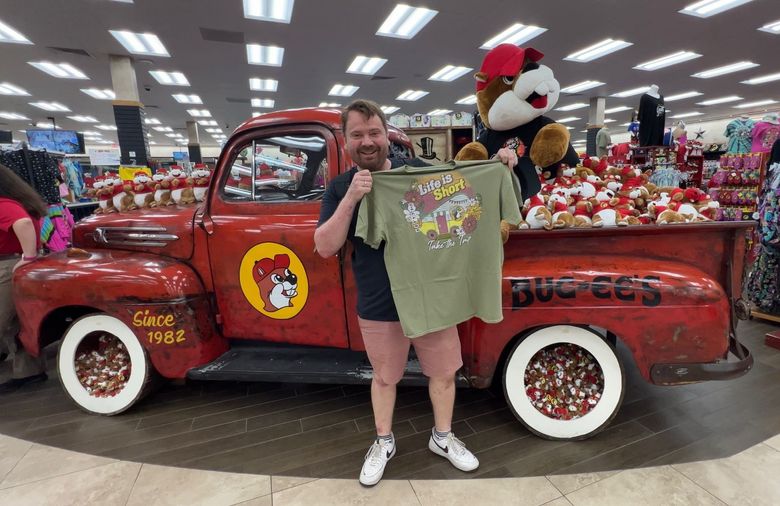
English soccer fans are being amazed by Texas barbecue. Watching them bite into a rib and seeing their eyes expand into saucer shapes and saying words such as “incredible” are fun. Norwegians who have been amazed by Waffle House's service, food, food portions, and reasonable prices. They are amazed that after anticipating needing $100 for the three of them to eat, receiving more food than they can eat, They walk out with $70 still in there pockets. The Frenchman amazed at free drink refills. Germans amazed at 60 fuel pumps, freshly-cooked brisket, walls of jerky, and souvenirs at Buc-ees. They exclaim that it isn't a gas station, it's a mall. Something many Southerners know and understand completely. 

 World Cup fans in the U.S. are sightseeing at … Buc-ee's and Bass Pro  Shops? | The Seattle Times Seattle Times 

German fans who were amazed by the Americans, who seeing that they were apparently stranded in Boston, offering the foreign strangers a free ride to their hotel. The South African stunned at watching women walk unafraid through a local park, and the total lack of walls, lights, and barbed wire around middle-class homes. The French being stunned by the overt patriotism at a game where the American team wasn't even playing. They watch red, white, blue smoke roll from the stadium roof and US Air Force jets fly overhead. And all their amazement at America's 250th Independence Day celebrations and all the flags hanging from homes everywhere. The amazement in the face of an Australian tasting Chic-fil-A for the first time. It's just fast food, isn't it?

 Women's World Cup: Fans stunned by incredible food at stadiums across  Australia and New Zealand | Daily Mail OnlineDaily Mail

These are things all Americans take for granted.

Certainly, these videos lack the objectivity and underlying criticism of Tocqueville. But, at the same time it has become clear that these foreign soccer fans realize that the picture of America that has been fed to them by mass media has been mostly a lie. Many now understand why so many will risk their lives and their fortunes to come to America. Many have said that they would like to stay, but like honest people are going back home. They love the American heart, the kindness, the can-do attitude, and the freedom.

Certainly, America has its faults. All places and people do. But, the kindness, culture, wealth, and welcoming attitudes of Americans who embrace all that is right are here on full display. It is who the majority of us are.

So, by all accounts, the World Cup will absolutely be a sports success and perhaps even a financial one. But, it is on the way to being, perhaps, a surprising cultural success anticipated by absolutely no one just a couple of months ago. The real success, though, is experiencing America through eyes of foreigners who were skeptical of their safety and the welcome they would receive when they left their homes. It reinforces the America half of its citizens love and believe in. And hopefully, it will help the other half to see what an incredible and amazing nation they actually live in. Especially so when they love to point to the opinions of foreigners toward the US.

08 July 2026

Patriots & Victims

I served in the in the US Army for nearly 29 years. I served as an Active Duty soldier for nine years-and-a-day, and then in the Army Reserves for a bit over two years, before finally ending up with the South Carolina Army National Guard (aka "SCARNG") for over 17 years. 

In those 28-plus years I had some interesting assignments and met some amazing and incredible people. Today, I want to talk about one those amazing people, a man I'll call Abdulla. I do not know of his status today, so I don't want to place him in a position of danger. You'll soon see why.

In 2004 I was sent to a school to train on the AH-64D Apache at Cecil Field, outside Jacksonville, Florida. A former Naval Air Station, the base had been turned over to civilian authority and a contractor had bid on the contract to train National Guard personnel on the "D Model." The 1st Battalion (Attack), 151st Aviation Regiment (aka "1/151 Aviation" or to the personnel of the unit "the battalion") was to be reequipped with the AH-64D and we had a group there to learn the finer points of a far more advanced helicopter. While there a VIP group came through that included the recently retired Army Aviation Branch Sergeant Major Edward P. Iannone, Jr., whom I had met just months before when he was still serving as a soldier. He was then working for the Army Aviation & Missile Command, or "AMCOM." We struck up a conversation and I mentioned why we were at the school. Cryptically, he told me that those new, more advanced aircraft may be delayed.

Right after our group returned from Florida, 1/151 Aviation received warning orders to prepare for deployment to Iraq. Which we did. In Summer 2004, we moved to Ft. Bragg, NC, for training and soon were loading up for deployment to Iraq, in record time we were told. In the meantime our commander had somehow finagled a favor and was able to have 14 of our 16 AH-64A helicopters painted into two-tone gray by the US Marines at Marine Corps Air Station Cherry Point. It was absolutely scandalous in the eyes of the US Army, but the US Army was able to do nothing about it if it wanted the battalion in Iraq! And we deployed with gray aircraft. It was a highly successful experiment, so therefore it was rejected by the US Army and no more US Army helicopters were ever again painted gray.

Interestingly, while we chose the call sign "Ghostrider," the same used by no less than two other units in-theater, the insurgency would call us the Blue Dragons. It referenced the occasional appearance of the gray helicopters that would appear in a bluish tint in the right light. Our commander refused to adopt it as a call sign and we continued to deal with conflicting call signs. 

We arrived in Kuwait where we unloaded the ships that had our equipment aboard and moved to the forward base in the Kuwaiti desert called Camp Buehring. I was assigned to the advance party and in early October we arrived at Qayyarrah West Airbase in northern Iraq to prepare the transition from the 10th Mountain Division's OH-58D Kiowa Warriors. Once the crown jewel of the Iraqi Air Force and called Saddam Air Base, the base had been essentially decimated by coalition forces during Desert Shield and Desert Storm, as well as Operation Iraqi Freedom. American forces had occupied it and termed it "Q-West" which was universally spoken as "Key West."

And it was here that I met Abdulla. 

I was assigned by my battalion commander as the liaison for our local Iraqi workers. They were hired through a local Iraqi contractor who provided the US forces on the base with laborers who would handle minor repairs and maintenance efforts to keep the infrastructure that was slowly being repaired in working order. I would take a HMMWV (High Mobility Multipurpose Wheeled Vehicle which is universally known as the "Humvee") and head to the main gate every morning to pick up "our" workers, who had spent a great deal of time avoiding the gaze of local insurgents on the way to work.

I learned much from them. After signing them in, I would distribute them to the battalion's individual company areas. The D Company contingent, which was my company, had five workers. They had a small building from which to work and I was immediately invited inside where tea was brewed and we discussed the day's tasking and other "important" things. They were able to teach me enough Arabic that I was nearly conversational within five months, surprising myself greatly! And I helped them to improve their English. 

Abdulla was the "straw boss" and clearly the senior member of the five. He and Ali (also not his name) carried themselves in a manner that reminded me of soldiers, which I would soon find our was a correct assumption. Ali had been a sergeant in the Iraqi Army. Abdulla was a retired infantry Sergeant Major, or likely referred to by their Anglophile army as a Warrant Officer 1 in that day. This meant Abdulla was the senior enlisted man in a battalion, with three companies of likely around 150-200 troops each.

During our time in Iraq we were engaged in Operation Iraqi Freedom III (OIFIII). During this time Al Qaeda and other groups had decided to take on the US and the nascent Iraqi National Guard across Iraq. The ING had been reconstituted from the Iraqi Army and was being trained by coalition forces. While it had many good soldiers, their loyalty to the new regime was questionable and their training was not complete. This led the insurgents to attempt the takeover of the northern, non-Kurdish portion of the country. This included Mosul and the smaller town of Tal Afar. The insurgents were rightly afraid of the Kurdish militia known as Peshmerga and stayed away from most of the country east of Mosul. They were, though, killing and intimidating anyone they could reasonably identify as working with, for, or doing business with the coalition. Beheading and public displays were the preferred methods.

I grew to respect Abdulla. He was direct and honest. He was also a patriot. I would later discover that he had a tattoo of the Iraqi Army crest on his inner forearm. There's no doubt he had fought the Iranians during the Iran-Iraq War. I felt real sorrow for him and Iraq. One morning during tea I could see he was agitated. During our conversation between the six of us this one morning, Abdulla looked coldly and determinedly at me and startled me by saying, "You Americans just need to nuke the whole country (of Iraq) and start over."

I replied by saying that it would mean the death of him and his family. He didn't blink. "I know."

It was later that I learned of the tattoo. He always wore long-sleeved shirts. I had assumed that he did it due to the work we had hired him to do. But, the sleeves were there to hide the tattoo that was no longer on his arm. There was still some ink on the edges of a large scar where the tattoo had once been.

Abdulla was in charge of an infantry unit during the invasion of Kuwait by Iraq, and the subsequent defense of Iraq's new 13th province. They were literally on the Kuwait-Saudi border looking at the forces arrayed against them after their conquest and the subsequent build-up of the allies of strange bedfellows who were lining up against Iraq during Operation Desert Shield. Abdulla's soldiers had worked steadily and efficiently to build bunkers and fighting positions that were planned and placed in such a way as to funnel allied armor and troops into kill zones of minefields and intense crossfire. It didn't work. The initial aerial portion of Operation Desert Shield was soon pounding their carefully crafted defenses into dust and splinters. Abdulla did everything in his ability to keep his troops ready for the upcoming battle. But, they mutinied. They seized him and, taking a heated piece of metal, scorched the tattoo off his arm.

I still wonder how Abdulla, Ali, and the other four men I met and shared tea with are doing today. I hope for them a stable and prosperous Iraq devoid of mad strongmen, Islamic terrorist, and the gross corruption it entailed. Maybe someday, we can meet again, and sit for some tea.

02 July 2026

Communists and Nazis - A Witnesses' View

My time in Germany as a contractor was challenging, exhausting, and fun. I worked with a fine group of people, generally, though much of the management and leadership left much to be desired. There WERE some outstanding leaders there, but they could not overcome the many others that should not have been there.

But that's another story, altogether.

While there I met some wonderful people who had so many stories to tell. And many did. One of those was Janine, an wonderful, older woman who worked at the Gasthaus where my wife and I stayed for most of the 22 months we were in Europe. My wife stands in front of the establishment below.


I offended Janine one day. I asked where in Germany she was from.

"Do I look German to you?" she asked aghast. Janine was a flaxen-haired woman with nicotine-stained teeth. She carried the beauty of her youth, though clearly aged, with dignity, style, and determination. My only answer was, "Honestly Janine, everyone looks American to me!" 

America is a nation of immigrants after all.

"I am Polish!" announced Janine as she struck a regal pose. Then she told me her story.

But first, a story of war and invasion. 

Poland was formed from diplomacy and conquest in the aftermath of World War One. It's bulk was carved from the carcass of eastern Prussia, and expanded after wars against Republican Russia, the new nation of Ukraine, and the newly formed Soviet Union. It was a nation widely known for its martial traditions. Poles had fought with and against the Russian Empire, with the Prussians and the Germans (after German unification), and with Napoleon, always with the eye to reestablish the Polish nation.

Janine was born in the portion of Poland that had been Ukraine before the Polish conquest. It was this part of Poland that the USSR was granted in the secret Ribbentrop-Molotov Treaty the week prior to the launch of World War Two. After the Nazi invasion, the USSR invaded eastern Poland two-and-a-half weeks later, retaking the land they believed to be theirs. Janine, a child at the time, and her mother (I assume her father was fighting the Germans or Soviets, or was conscripted into what was essentially slave labor for the conquerors) found themselves under the communist yoke for the next 21 months.

Then, Nazi Germany launched Operation Barbarossa, the invasion of the Soviet Union. Very quickly Janine found herself under the rule of Nazis for nearly two years. 

German fortunes turned catastrophically in February 1943 at Stalingrad (now the city of Volgograd) and saw the steady and inexorable retreat that eventually led to defeat in 1945. Meanwhile, as the Soviets advanced steadily toward their home, Janine's mother had to make the decision to await liberation by the USSR's Red Army, or to run away with the Nazis.

They chose the Nazis.

"Really?" I asked. "Why?"

"The Nazis were much better and kinder than the communists." Apparently, it wasn't a difficult decision. https://upload.wikimedia.org/wikipedia/commons/e/e6/Fotothek_df_pk_0000126_029_Fl%C3%BCchtlinge_mit_Handwagen.jpg

Photo: Deutsche Fotothek of the Saxon State Library / State and University Library Dresden. Original caption: "Mann repariert Fahrradschlauch - Frauen holen Wasser am Brunnen auf der Straße" (This file is licensed under the Creative Commons Attribution-Share Alike 3.0 Germany license.)

Janine's family settled in Bavaria, in then-West Germany. She would go on to work for DeutscheBank in their office in Tripoli, Libya, where she would witness the US airstrikes against Libya's Gaddafi Regime after their attack on US troops at a night club in Germany. 

In some ways, I envied her view of some of the most striking events in history. But, on the other hand...

If anything, her insights into a system that was WORSE than Nazism were a revelation. For that, I am forever grateful.